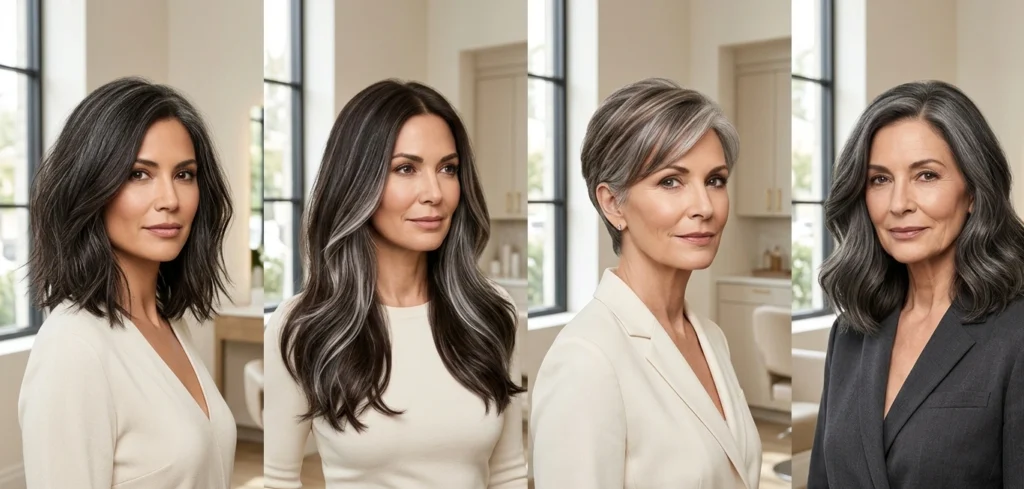
Gray hair can be beautiful, but growing out gray strands against dark hair can feel frustrating. The contrast between silver roots and dark lengths can look noticeable, especially during the early stages of going gray.
That’s where gray blending for dark hair comes in.
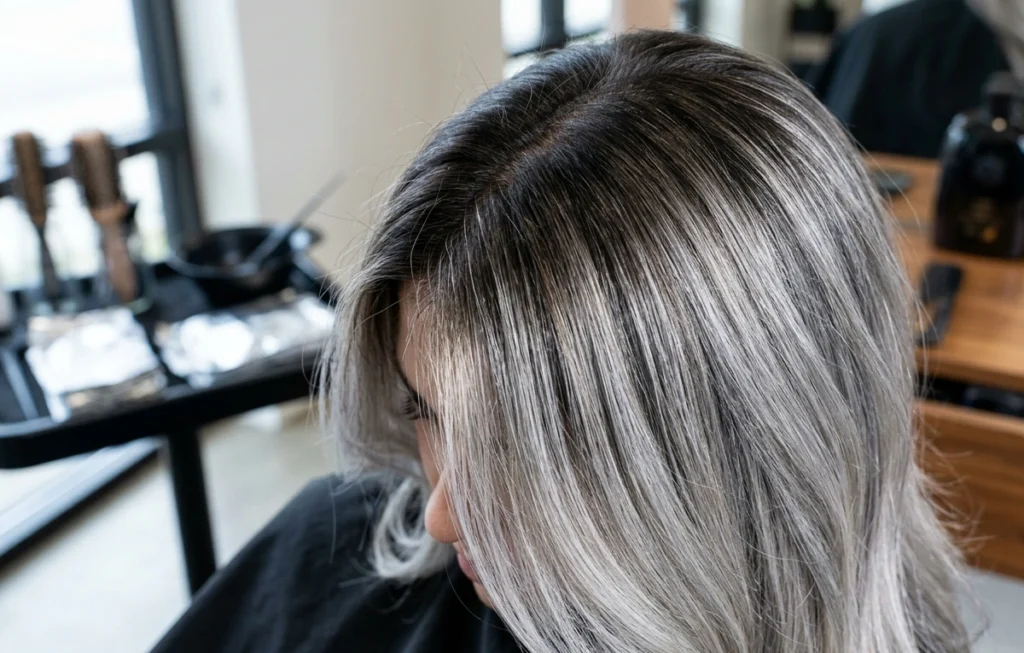
Instead of completely covering gray roots with permanent color, gray blending uses highlights, lowlights, balayage, toning, and strategic color placement to soften the contrast. The result is a more natural transition that can require less frequent salon maintenance.
Whether you have black, dark brown, or brunette hair, there are several ways to blend gray beautifully while keeping your overall look dimensional and polished.
What Is Gray Blending?
Gray blending is a hair-coloring technique designed to soften the contrast between natural gray hair and darker strands. Rather than trying to hide every gray hair, your stylist works with your natural silver pattern.
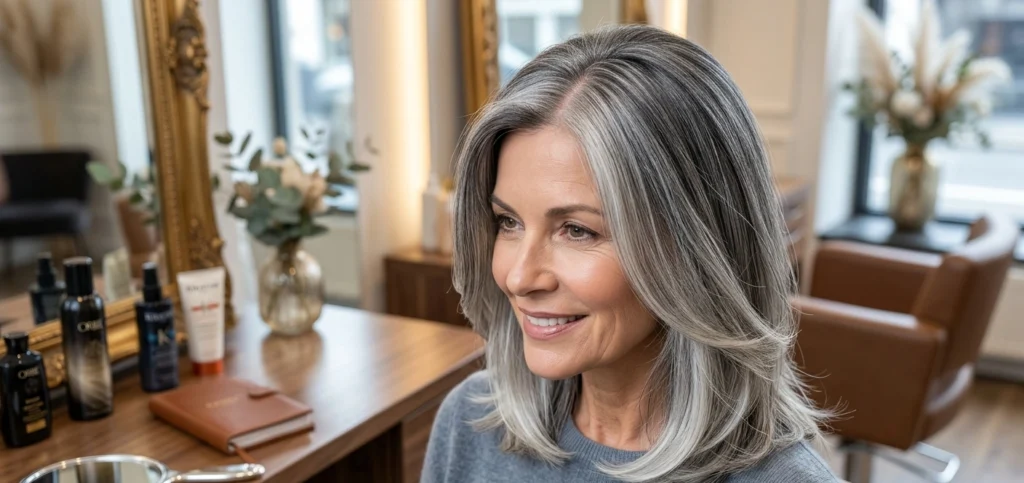
Depending on your starting color and the amount of gray you have, this may involve:
- Fine highlights
- Silver or ash balayage
- Lowlights
- Babylights
- Gray-toned glosses
- Face-framing highlights
- Strategic color placement
The goal isn’t necessarily to become completely gray overnight. Instead, it’s to make the transition between dark and gray hair look softer and more intentional.
Why Gray Blending Works Well for Dark Hair
Gray strands can be especially noticeable against very dark brown or black hair. Traditional root touch-ups can hide them, but they also create a visible regrowth line once the roots appear again.
Gray blending offers a softer alternative.
It can:
- Reduce the harsh contrast between dark and gray strands
- Create more dimension
- Make new gray growth less obvious
- Reduce the need for frequent root coloring
- Help you gradually embrace your natural gray
- Give dark hair a softer, more modern appearance
Gray Blending Ideas for Dark Hair
Here are 15 approaches to discuss with your stylist.
1. Silver Balayage
Silver balayage is one of the most dramatic ways to blend gray with dark hair. Instead of creating uniform highlights, lighter pieces are painted through selected sections of the hair.
The darker base remains visible, creating a beautiful contrast between charcoal, silver, and natural gray.
Best for: Dark brown to black hair with noticeable gray.
2. Ash Brown Highlights
If bright silver isn’t your style, ash brown highlights offer a softer transition.
Cool-toned brown pieces can break up the contrast between dark hair and gray roots without making the overall color look dramatically lighter.
Best for: Dark brunette hair with scattered gray.
3. Salt-and-Pepper Blending
Salt-and-pepper hair combines natural dark strands with gray and silver pieces. Instead of covering the gray, the stylist enhances the pattern with carefully placed highlights.
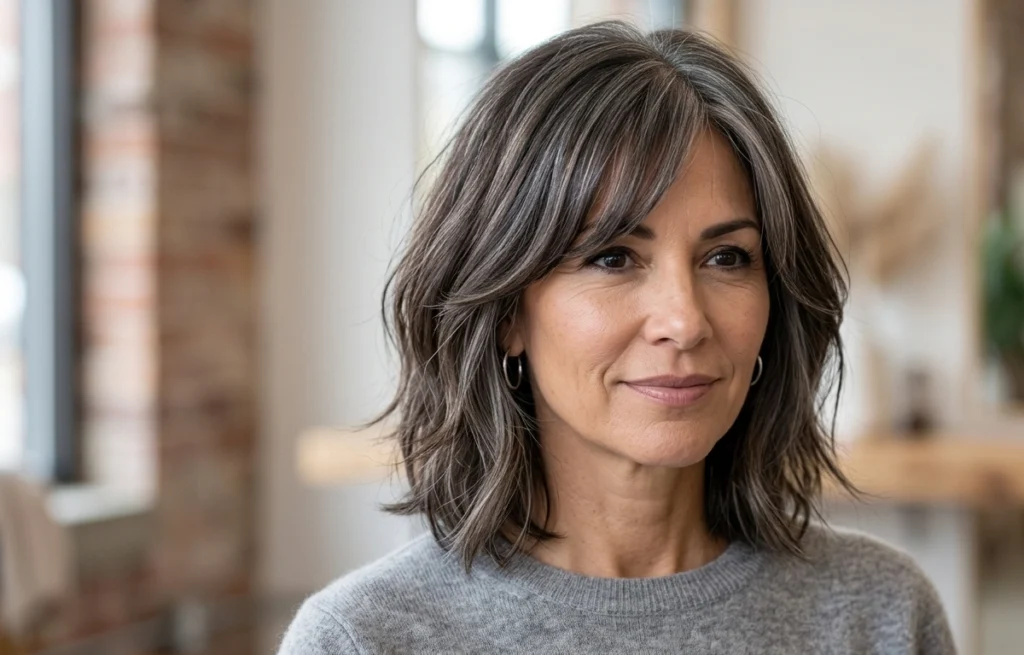
The finished look can appear incredibly natural.
Best for: Women with a substantial amount of natural gray.
4. Gray Babylights
Babylights are very fine highlights that mimic the look of naturally lighter strands. When used for gray blending, they can create a subtle transition without obvious streaks.
This is a great choice if you want your color to look soft rather than heavily highlighted.
Best for: Early gray growth.
5. Face-Framing Silver Highlights
If most of your gray appears around your hairline, strategically placed silver highlights can make the transition look intentional.
A few lighter pieces around the face can also brighten your overall appearance.
Best for: Gray concentrated around the temples and hairline.
6. Charcoal and Silver Blend
Instead of jumping directly from black to bright silver, ask your stylist about blending charcoal, smoky gray, and silver tones.
These shades create a gradual transition that works beautifully with naturally dark hair.
Best for: Black or very dark brown hair.
7. Gray Balayage on Dark Brown Hair
Dark brown hair provides a softer starting point for gray blending than jet-black hair.
Cool gray balayage can create dimension while allowing some of your natural brown to remain visible.
Best for: Medium to dark brunette hair.
8. Lowlights With Silver Highlights
Gray blending doesn’t have to mean adding only lighter pieces.
Your stylist can combine silver highlights with darker lowlights to create depth. This technique can make the transition appear much more natural.
Best for: Thick or dimensional hair.
9. Smoky Gray Gloss
A semi-permanent smoky gray gloss can soften unwanted warmth and add a cooler appearance to dark hair.
It’s particularly useful when you want a subtle change rather than a dramatic lightening process.
Best for: Brunettes who want a low-commitment option.
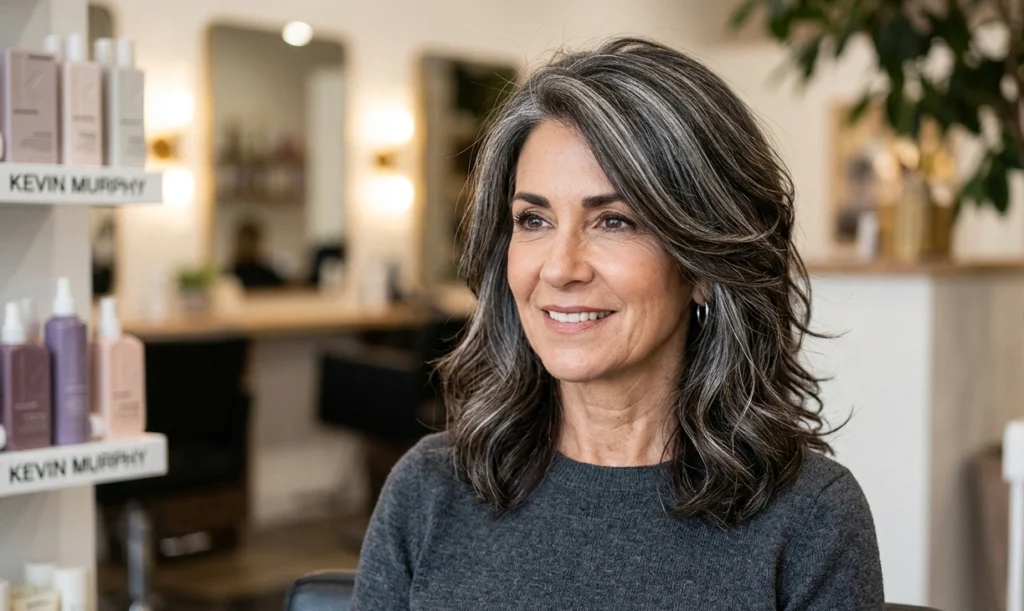
10. Root Smudge
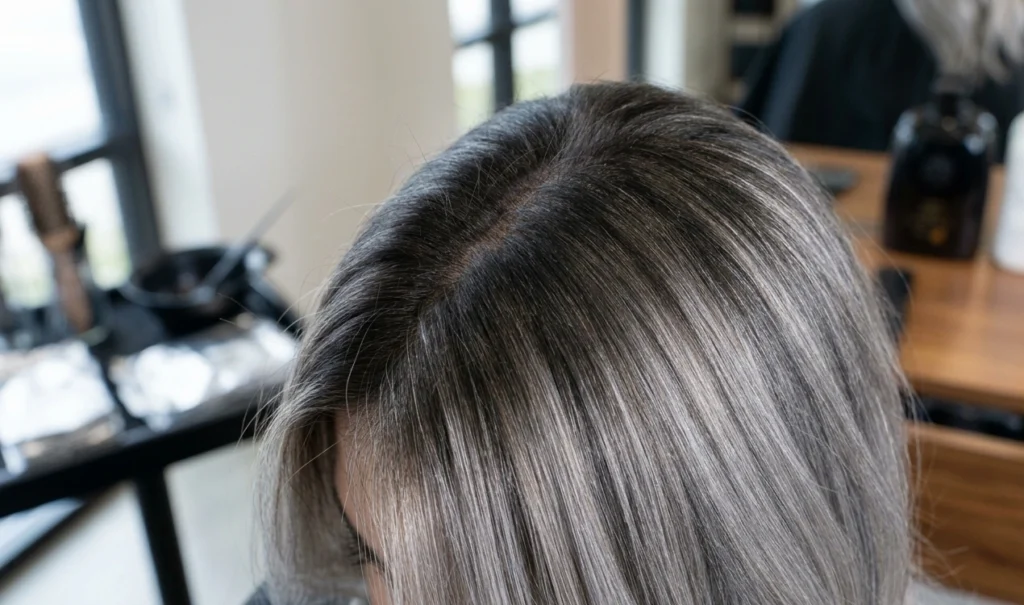
A root smudge creates a softer transition between your natural roots and highlighted lengths.
Rather than having a sharp line between dark roots and lighter hair, the colors blend gradually.
Best for: Highlighted dark hair.
11. Mushroom Brown and Gray
Mushroom brown is a cool, muted brunette shade that works beautifully with gray.
Adding subtle gray tones to mushroom brown creates a sophisticated blend without looking overly silver.
Best for: Women who want a neutral, understated color.
12. Silver Money Pieces
For a bolder look, silver face-framing pieces can be added around the front of dark hair.
This creates a modern contrast while drawing attention toward the face.
Best for: Women who enjoy high-contrast color.
13. Dark Espresso With Gray Highlights
If you love your dark hair and aren’t ready to give it up, espresso brown with subtle gray highlights can be a beautiful compromise.
The gray pieces add dimension without completely changing your base color.
Best for: Dark brown hair.
14. Natural Salt-and-Pepper Balayage
Some women prefer a very natural result. In this case, your stylist can use your existing gray pattern as a guide and add carefully placed highlights around it.
The result looks less like a traditional color treatment and more like naturally evolving hair.
Best for: Women gradually embracing their natural gray.
15. Full Silver Transition
If you’re ready to stop coloring your roots, a full silver transition can help you get there more gracefully.
This process may require several salon appointments, especially if your hair has been colored very dark. Your stylist can gradually lighten selected sections while protecting the condition of your hair.
Best for: Women committed to going fully gray.
Quick Comparison: Gray Blending Techniques
| Gray Blending Method | Best For | Maintenance | Final Look |
|---|---|---|---|
| Silver Balayage | Dark hair | Medium | Bright and dimensional |
| Ash Brown Highlights | Brunettes | Medium | Soft and natural |
| Salt-and-Pepper Blend | Natural gray | Low | Very natural |
| Gray Babylights | Early gray | Medium | Subtle |
| Face-Framing Silver | Temple gray | Medium | Bright and modern |
| Charcoal & Silver | Black hair | Medium | Smoky and sophisticated |
| Root Smudge | Highlighted hair | Low | Seamless |
| Smoky Gray Gloss | Subtle change | Low | Cool and polished |
| Mushroom Brown | Brunettes | Medium | Neutral and elegant |
| Full Silver Transition | Going fully gray | High initially | Natural silver |
My Favorite Gray Blending Ideas for Dark Hair
If you’re unsure where to start, these are five options worth discussing with your stylist.
1. Salt-and-Pepper Blending
This is my favorite choice for women who want to embrace their natural gray. It doesn’t fight against the gray pattern. Instead, it enhances it.
2. Silver Balayage
Silver balayage creates beautiful dimension and works particularly well when you already have a noticeable amount of gray.
3. Ash Brown Highlights
This is a great middle ground if you’re not ready for obvious silver hair. The cool brown tones soften the contrast while keeping the overall look brunette.
4. Face-Framing Silver
If your gray is concentrated around your temples, you don’t necessarily need to lighten your entire head. A few strategically placed silver pieces can make a big difference.
5. Charcoal and Silver
For naturally black hair, charcoal and silver can create a much smoother transition than jumping directly from black to bright white or silver.
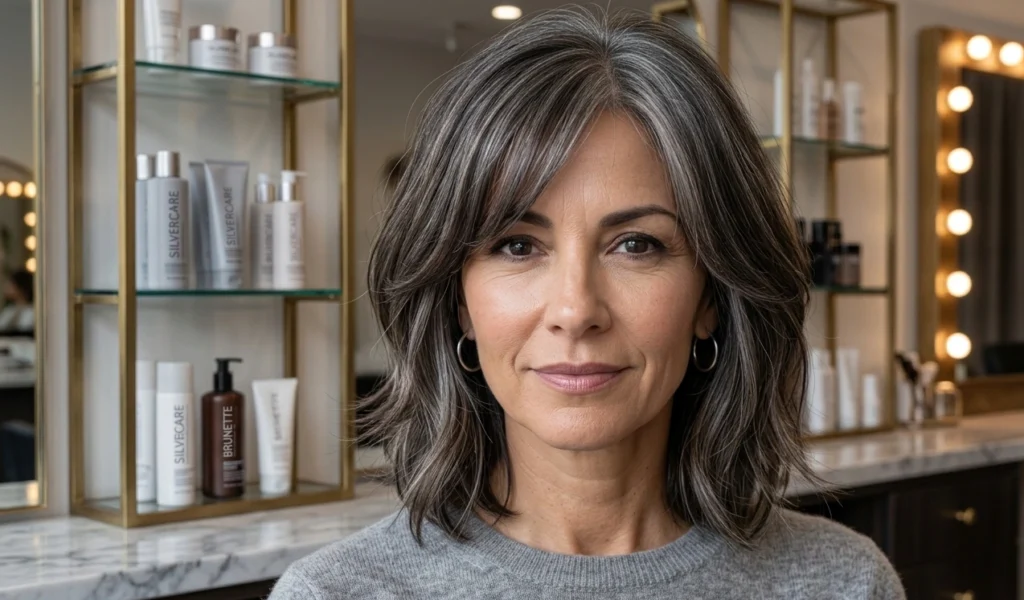
How Long Does Gray Blending Take?
The time required depends on your current hair color, previous color treatments, amount of gray, and desired result.
A subtle gray-blending appointment may take a few hours, while a major transition from very dark permanent color to silver can require multiple appointments.
If your hair has been repeatedly colored black, don’t expect to reach bright silver in one session. Removing dark artificial pigment can be a gradual process.
Your stylist may recommend several appointments to protect the condition of your hair.
How Much Does Gray Blending Cost?
The price varies significantly by salon, location, hair length, density, and the amount of lightening required.
| Service | Relative Cost |
|---|---|
| Gray Gloss | $ |
| Root Smudge | $$ |
| Gray Babylights | $$–$$$ |
| Partial Balayage | $$–$$$ |
| Full Gray Balayage | $$$ |
| Major Silver Transition | $$$–$$$$ |
For the most accurate price, ask your stylist for a consultation before booking. A major color correction or silver transition generally costs more than a simple gloss or partial highlight.
How Often Should You Maintain Gray Blending?
One advantage of gray blending is that it can grow out more softly than traditional all-over color.
Depending on the technique, many people return to the salon every 8–12 weeks for maintenance.
A gloss may need refreshing sooner, while balayage can often be left longer because the highlights aren’t placed directly at the root.
Your maintenance schedule will depend on how quickly your natural gray grows and how noticeable you want the contrast to be.
How to Care for Gray-Blended Dark Hair
Gray-blended hair needs both moisture and color care.
Use a Moisturizing Shampoo
Gray hair can feel drier and rougher than pigmented hair. A gentle moisturizing shampoo can help maintain softness.
Try Purple Shampoo Carefully
Purple shampoo can help neutralize unwanted yellow tones in silver hair. However, you don’t necessarily need to use it every wash.
Overuse can make some hair look dull or overly cool.
Use a Deep Conditioner
A weekly conditioning treatment can help keep highlighted or lightened sections smooth.
Protect Your Hair From Heat
Always apply heat protectant before using a blow dryer, straightener, or curling iron.
Limit Excessive Chemical Processing
If your hair is already lightened, avoid unnecessary overlapping color or frequent bleaching. Healthy hair will make your gray blend look much better.
Gray Blending vs. Gray Coverage
These two approaches have very different goals.
| Gray Blending | Gray Coverage |
|---|---|
| Softens gray contrast | Hides gray completely |
| Uses highlights and tonal techniques | Usually uses permanent color |
| Creates dimension | Creates more uniform color |
| Regrowth can be less obvious | Root line can be noticeable |
| Helps transition to natural gray | Maintains colored hair |
| Often requires less frequent maintenance | Usually needs regular root touch-ups |
If your goal is eventually to embrace your natural gray, blending may be more suitable than repeatedly covering every gray strand.
Common Gray Blending Mistakes
Going Too Light Too Quickly
Trying to transform very dark hair into silver in one appointment can put unnecessary stress on the hair.
Choosing Warm Highlights
Warm golden highlights may create an obvious contrast against cool gray strands. Cool or neutral tones often blend more naturally.
Ignoring Your Natural Gray Pattern
Your gray isn’t random. Working with where it naturally appears can produce a much more believable result.
Overusing Purple Shampoo
Too much purple shampoo can leave hair looking dull or overly violet.
Skipping a Consultation
Gray blending is highly personalized. A professional should assess your natural color, previous dye, hair condition, and desired result before choosing a technique.
Who Is Gray Blending Best For?
Gray blending can be a good option if you:
- Have dark brown or black hair
- Are beginning to notice more gray
- Want less obvious root growth
- Want to gradually embrace natural gray
- Prefer dimensional color
- Don’t want frequent all-over root coverage
- Want a softer alternative to permanent gray coverage
It may not be the right approach if you want completely uniform dark hair with no visible gray.
Frequently Asked Questions
Can you blend gray hair with dark brown hair?
Yes. Gray can be blended with dark brown hair using techniques such as ash highlights, balayage, babylights, lowlights, and gray-toned glosses.
Can black hair be blended with gray?
Yes, but the process can be more involved. Because the contrast between black and gray is strong, your stylist may use charcoal, silver, ash, and carefully placed highlights to create a gradual transition.
Is gray blending better than covering gray?
Neither is universally better. Gray blending is ideal if you want to soften the appearance of gray and gradually embrace it. Full coverage is better if you prefer an even, solid color.
How do you blend gray hair without looking old?
A modern haircut and dimensional color can make a major difference. Instead of applying a single flat gray tone, consider subtle highlights, lowlights, and cool-toned shades that work with your natural hair.
Can gray blending damage dark hair?
Some techniques require lightening, which can cause damage if done incorrectly or too aggressively. A professional colorist can choose an approach that balances your desired result with the condition of your hair.
How long does gray blending last?
Many gray-blending techniques can remain attractive for around 8–12 weeks, although the exact timeline depends on your hair growth, technique, and desired level of maintenance.
Final Thoughts
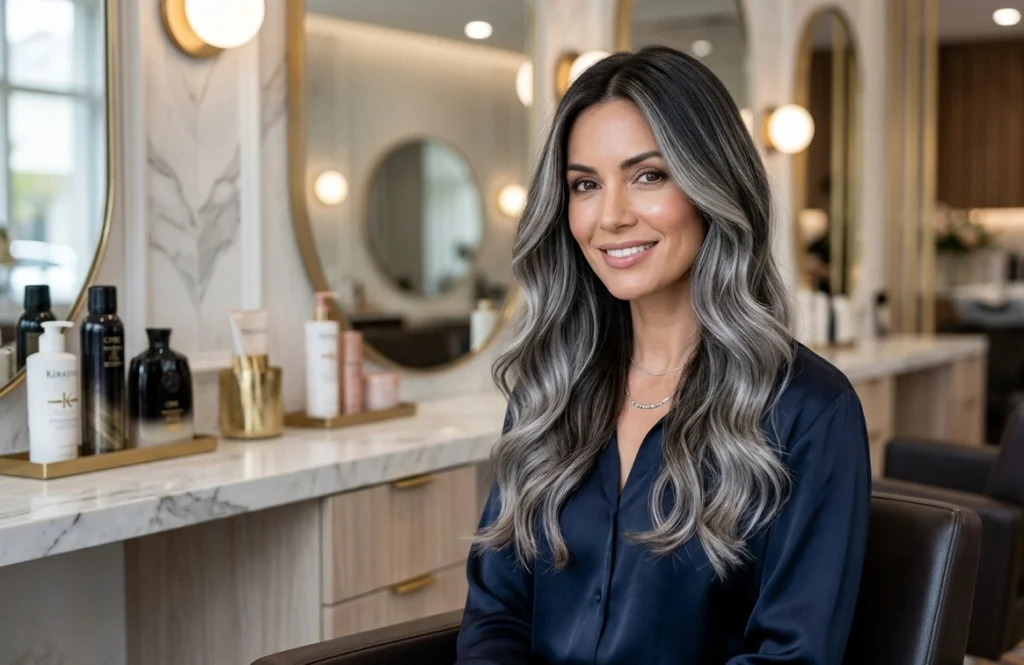
Gray blending for dark hair offers a beautiful way to soften the contrast between natural silver strands and a darker base. Instead of constantly chasing gray roots, you can use highlights, balayage, lowlights, glosses, and strategic color placement to create a more natural transition.
For a subtle change, ash brown highlights or gray babylights are excellent starting points. If you’re ready to embrace more silver, salt-and-pepper blending or a charcoal-and-silver balayage can create a stunning result.
The most important step is choosing a technique that works with your natural gray pattern, hair condition, and long-term goal. With the right approach, gray hair can look intentional, dimensional, and incredibly stylish.