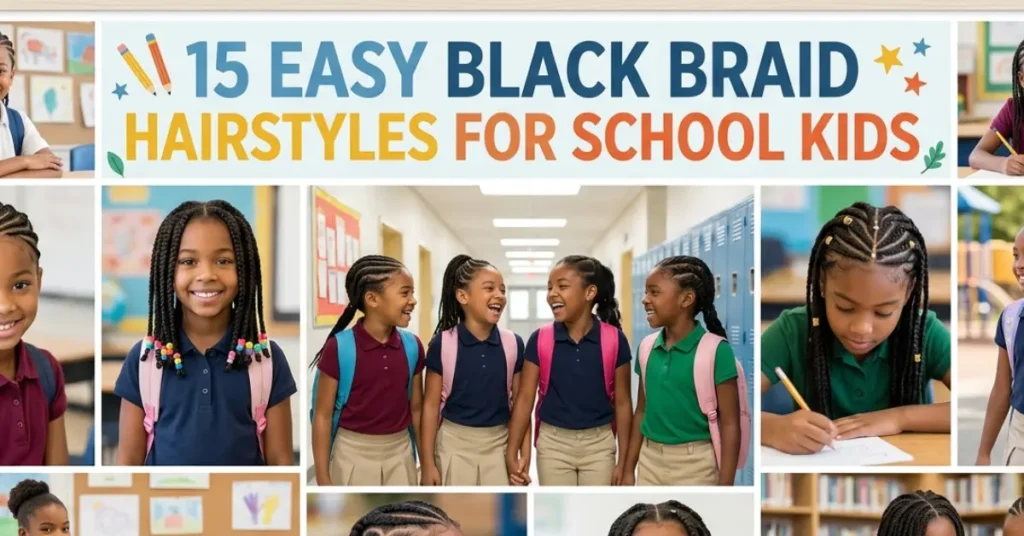
The right Black Braid Hairstyles for School Kids solve two problems at once — they look put-together for weeks, and they cut your morning routine down to minutes. Below you’ll find 15 braid hairstyles for school, plus something most guides skip entirely: real cost ranges, the materials you’ll actually need, and how to buy braiding hair without wasting money. By the end, you’ll know exactly which style fits your child’s age, budget, and schedule.
Why Braids Are the Best School Hairstyle for Black Kids
Black kids braids are one of the most practical protective hairstyles for kids because they tuck the hair’s ends away, which can reduce daily manipulation and help protect the hair when done properly. They also survive gym class, recess, and nap time far better than loose styles. A well-done braid style can realistically last 2–6 weeks, which means fewer stressful mornings and less handling of the hair overall — handling is one of the biggest causes of damage on natural hair.
Beyond durability, braids are flexible. A single set of cornrow styles for girls can be worn down one day, in a bun the next, and in pigtails after that — so the “style” changes even though the braids stay in.
(Source: American Academy of Dermatology Association – Protective Hairstyles and Hair Care Tips: https://www.aad.org/public/everyday-care/hair-scalp-care/hair/protect-hairstyles)
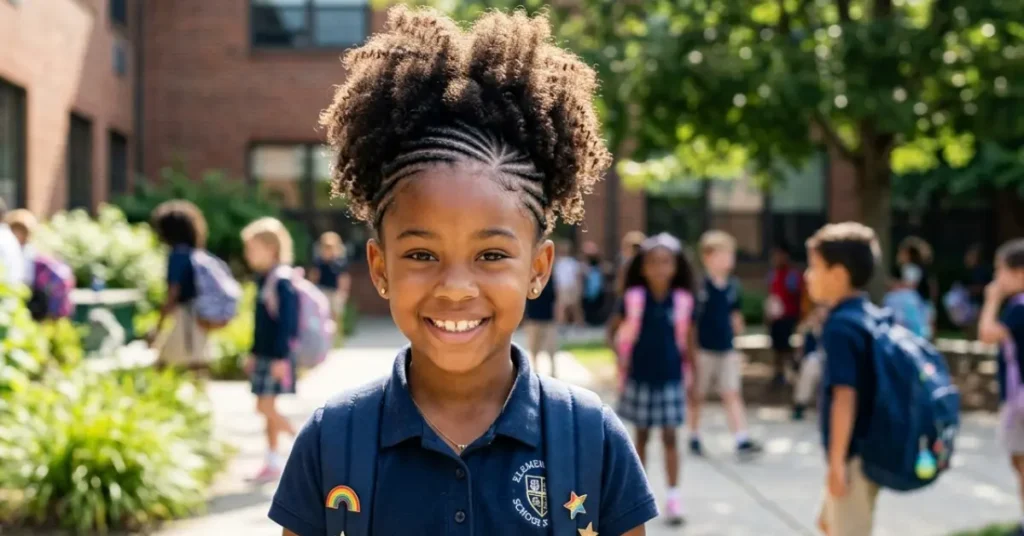
15 Braid Hairstyles for School
Each style below includes the look, best age group, a simple how-to, time needed, and an honest material cost estimate so you can plan ahead.
1. Knotless Box Braids
Look: Braids that start with your child’s natural hair and gradually add extension hair, so there’s no bulky knot at the root.
Best for: Elementary through teens.
How-to:
- Section hair into even squares (medium size works best for kids)
- Braid 2–3 inches with natural hair only, then feed in extension hair gradually
- Continue braiding to desired length and seal ends with warm water or a small elastic
Time: 3–5 hours depending on size and length.
Material cost: 4–6 packs of braiding hair (kanekalon or synthetic), roughly $15–$35 total.
Looking for more easy hairstyles beyond braids? Explore our Half-Up Half-Down Haircut Ideas for stylish, school-friendly looks that take just minutes to create.
2. Cornrows (Straight-Back)
Look: Hair braided flat against the scalp in straight rows from front to back.
Best for: Toddlers to teens — one of the most versatile cornrow styles for girls.
How-to:
- Part hair into straight, even rows
- Braid each row flat to the scalp, picking up hair as you go
- Secure ends with small bands or beads
Time: 1–2 hours (no extensions needed).
Material cost: $0–$10 if using only natural hair; add $5–$10 for beads or cuffs.
3. Feed-In Braids
Look: Braids that start thin near the hairline and gradually thicken as extension hair is fed in — gives a natural, tapered root.
Best for: Tweens and teens.
How-to:
- Start each braid with a small section of natural hair
- Gradually add small pieces of extension hair every few passes
- Continue to full length, sealing ends
Time: 2–4 hours.
Material cost: 3–5 packs, about $15–$30.
4. Stitch Braids
Look: Cornrows with a raised, defined center line that looks like a stitch running down each row.
Best for: Elementary through teens.
How-to:
- Part hair into clean, even sections
- Braid tightly and evenly to keep the “stitch” line visible
- Finish ends with a band or seal
Time: 2–3 hours.
Material cost: $10–$25 if extensions are added for length.
5. Bob Braids
Look: Shoulder-length or shorter braids — a lighter, faster option.
Best for: Younger kids and anyone who wants less weight on the scalp.
How-to:
- Section hair as usual, but keep braids short (chin to shoulder length)
- Use less extension hair per braid since length is shorter
- Seal ends and add a middle or side part for style
Time: 2–3 hours (faster than longer styles).
Material cost: 2–3 packs, about $10–$20 — one of the cheapest options on this list.
6. Bantu Knot Braids
Look: Small braided or twisted sections wound into tight coiled knots.
Best for: Elementary and up.
How-to:
- Section hair into small, even parts
- Twist or braid each section, then wind it around itself into a knot
- Secure with a small hair tie
Time: 1.5–2.5 hours.
Material cost: Little to none if done on natural hair only.
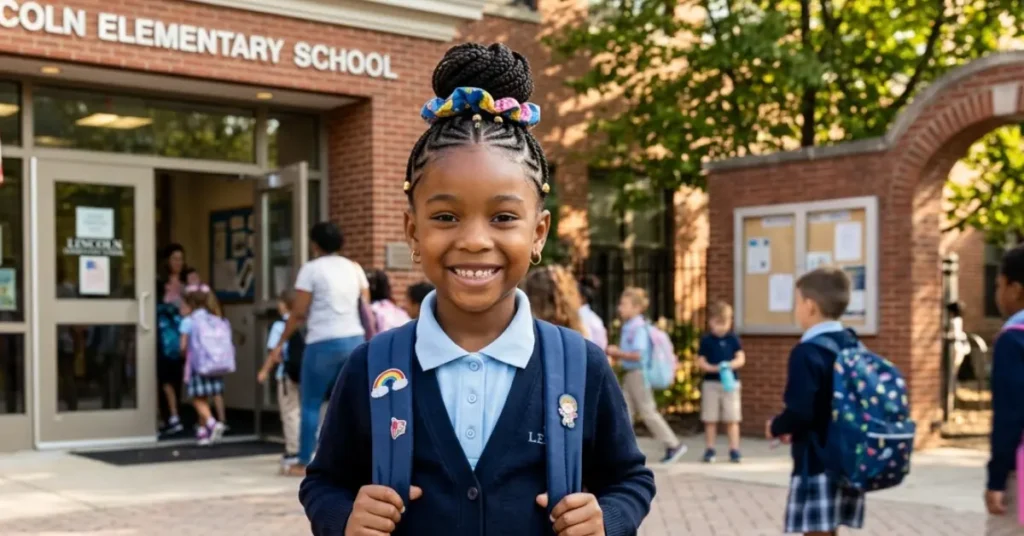
7. Fulani Braids with Beads
Look: Cornrows along the center with braids flowing to the sides, often finished with beads.
Best for: Elementary through teens.
How-to:
- Braid a center cornrow path from front to back
- Braid the remaining sections into individual braids
- Add beads or cuffs to the ends
Time: 3–4 hours.
Material cost: $15–$25 for hair plus $5–$15 for beads.
8. Two Braids with Beads or Design
Look: A simple two-braid pigtail style, often with a heart, zigzag, or straight part design.
Best for: Toddlers and younger elementary kids — the easiest style to maintain.
How-to:
- Create your desired part (straight, zigzag, or heart shape)
- Braid each side into a single braid
- Add beads or barrettes to the ends
Time: 20–40 minutes — the fastest style here.
Material cost: Under $10 if using natural hair with just beads.
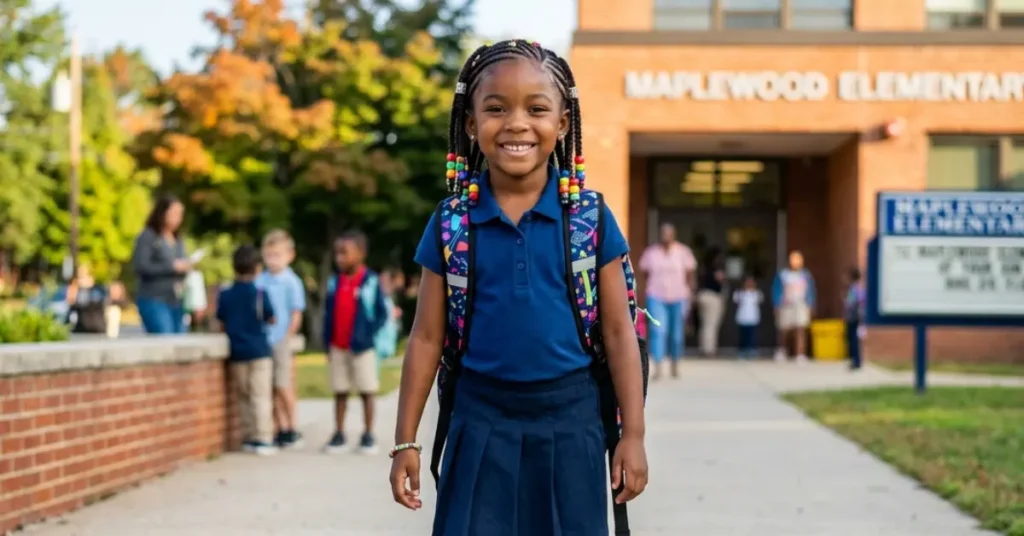
9. Mini Passion Twists
Look: Soft, textured twists using pre-curled hair for a bohemian look.
Best for: Teens (twists can be heavier, so better for older kids with more scalp tolerance).
How-to:
- Section hair into small parts
- Wrap natural hair with twist hair, twisting down to the ends
- Dip ends in hot water briefly to set the curl (adult supervision required)
Time: 4–6 hours.
Material cost: 4–6 packs of pre-looped twist hair, $25–$45.
Not sure which hairstyle will look best with your face shape? Our What Haircut Suits a Round Face Female guide shares flattering haircut ideas to help you choose with confidence.
10. Crochet Braids
Look: Pre-braided extensions looped through cornrowed natural hair using a crochet hook.
Best for: Anyone wanting a fast install with a fuller look.
How-to:
- Cornrow natural hair flat as a base
- Use a crochet needle to loop pre-braided hair through the cornrows
- Cut and style ends as needed
Time: 1.5–3 hours — faster than most because the hair is pre-braided.
Material cost: 2–4 packs of crochet hair, $20–$40.
11. Lemon Braids
Look: Clean, feed-in braids in a defined side-swoop pattern that lays flat and photographs well.
Best for: Elementary through teens.
How-to:
- Feed in braids starting at a deep side part
- Keep the pattern swooping in one direction for the signature look
- Seal and finish with a ponytail option for variety
Time: 3–5 hours.
Material cost: $15–$30.
12. Bubble Braids
Look: A braid or ponytail sectioned off with small elastics at intervals to create a “bubble” effect.
Best for: All ages — one of the simplest styles to recreate at home.
How-to:
- Gather hair into a ponytail or braid section
- Place small elastics every 1–2 inches down the length
- Gently pull the hair between each band to create the bubble shape
Time: 20–30 minutes.
Material cost: Under $5 (just elastics), or $10–$20 if using extensions for length.
13. Goddess Braids
Look: Thick, raised cornrows that stand out from the scalp, often styled into an updo.
Best for: Teens for special occasions, or elementary for a dressier school day.
How-to:
- Braid thick cornrows with an under-hand technique to raise them off the scalp
- Style loose ends into a bun or ponytail
- Secure with pins if needed
Time: 2–3 hours.
Material cost: $10–$25 depending on whether extensions are added.
If you’re looking for more ways to add volume and try a fresh new look, don’t miss our Curtain Bangs for Women with Fine Hair guide packed with practical styling tips.
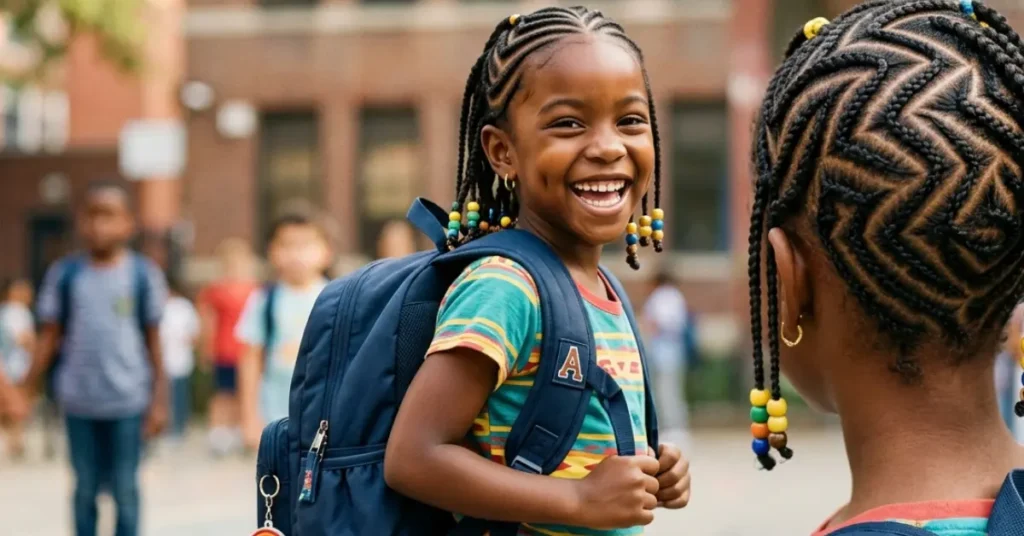
14. Mini Braids with Curls
Look: Small, neat braids with curled or textured ends left loose.
Best for: Tweens and teens who want a playful, low-maintenance look.
How-to:
- Braid hair into small, even sections
- Leave 1–2 inches of extension hair loose at the ends
- Curl the loose ends with a perm rod or curling wand (adult use only)
Time: 4–6 hours (small braids take longer).
Material cost: $20–$35 for curly-textured braiding hair.
15. Zigzag Cornrows into a Low Bun
Look: Cornrows braided in a zigzag pattern, gathered into a neat bun at the back.
Best for: Elementary through teens — great for picture day.
How-to:
- Part hair in a zigzag pattern using the end of a rat-tail comb
- Braid each row flat to the scalp
- Gather all braids into a low bun and secure with pins or an elastic
Time: 2–3 hours.
Material cost: $0–$15 depending on length needed.
How Much Do Kids’ Braids Cost? (Budget Breakdown)
This is the part most guides never mention — but it’s often the deciding factor for parents.
Salon price ranges (US average, per full head):
- Simple cornrows (no extensions): $25–$50
- Box braids or knotless braids: $60–$150, depending on size and length
- Twists (Senegalese/passion): $80–$180
- Bantu knots or two-braid styles: $20–$40
- Crochet braids: $50–$100
DIY vs. salon comparison:
| DIY at Home | Salon | |
| Cost | Materials only ($5–$45) | $25–$180 |
| Time | Longer if inexperienced | Faster, done by a pro |
| Longevity | Depends on skill | Usually lasts longer, neater |
| Best for | Simple styles (bubble braids, two braids) | Detailed styles (knotless, Fulani) |
Hidden costs to plan for:
- Take-down time/cost (some salons charge separately to remove old braids)
- Touch-ups for growing edges after 2–3 weeks
- Products for maintenance (edge control, scalp oil, satin bonnet)
Braiding Hair & Materials You’ll Need
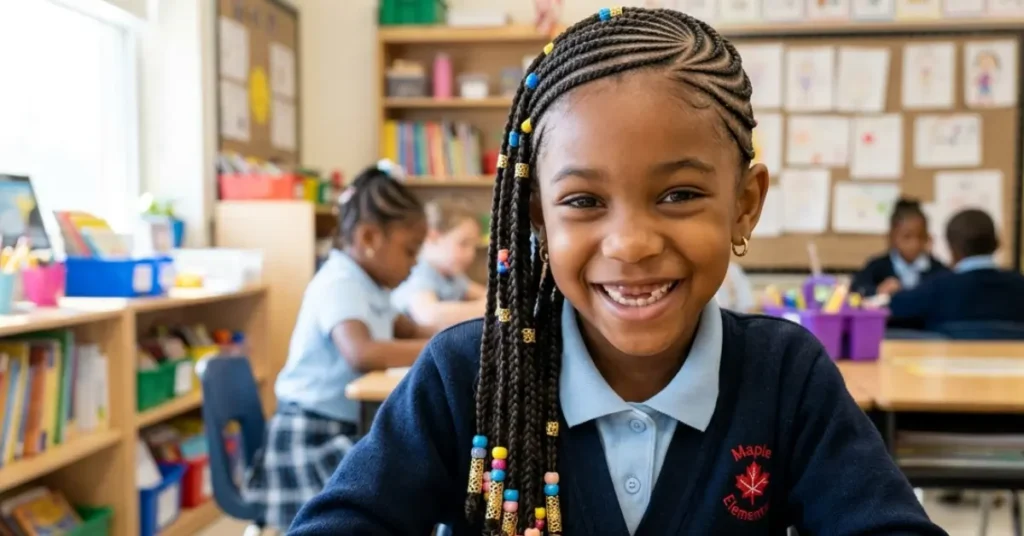
Types of braiding hair:
- Kanekalon (synthetic) — most affordable, widely available, good for kids’ everyday styles
- Human hair blends — softer, more natural movement, higher cost
- Pre-stretched hair — reduces tangling and cuts prep time, slightly pricier
- Pre-looped/crochet hair — pre-braided or pre-curled for fast installs
Material cost per style (quick reference):
- Low cost ($0–$15): cornrows, two braids, bubble braids, Bantu knots
- Mid cost ($15–$30): stitch braids, feed-ins, lemon braids, goddess braids
- Higher cost ($25–$45): knotless box braids, passion twists, mini braids with curls
Tools you’ll need:
- Rat-tail comb (for clean parting)
- Edge brush and gel
- Small elastics and duckbill clips
- Beads, cuffs, or hair jewelry (optional)
- Spray bottle with water or leave-in conditioner (keeps hair manageable while braiding)
How to Buy Braiding Hair (Buyer’s Tips)
How much hair to buy:
- Most full-head styles need 4–6 packs of standard kanekalon hair
- Shorter styles like bob braids need only 2–3 packs
- Buy one extra pack if your child’s hair is thick or you want fuller braids
What to check before buying:
- Texture match: make sure the hair texture blends with your child’s natural hair (kinky, straight, or curly-textured)
- Length: buy slightly longer than needed — you can always trim, but you can’t add length back
- Shedding and tangling: check reviews for how easily the hair sheds or tangles, especially for longer-wear styles
- Heat resistance: if you plan to dip ends in hot water to seal them, confirm the hair is heat-friendly (most kanekalon is)
- Return policy: buy from sellers with a clear return or exchange policy in case the color or texture doesn’t match
Budget tip: Buying synthetic braiding hair in bulk packs is almost always cheaper per style than pre-looped or pre-curled hair — but pre-looped hair saves significant time, which matters if you’re braiding the night before school.
How to Choose the Right Style by Age
- Toddlers: two braids, simple cornrows, Bantu knots — anything light and quick, since scalp sensitivity is highest at this age
- Elementary school: stitch braids, feed-ins, lemon braids, zigzag cornrows — enough style without long salon hours
- Tweens and teens: knotless braids, passion twists, goddess braids, mini braids with curls — more detailed styles they can help choose and personalize
Caring for Braids During the School Week
- Night routine: After trying dozens of school braid styles, I’ve found that a satin bonnet makes the biggest difference. Kids who sleep without one usually wake up with frizz around the edges within a few days.
- Scalp care: apply a light oil to the scalp every few days to prevent dryness and itching
- Morning refresh: Gently tame loose strands with a light layer of edge control, using only enough to keep the style neat without leaving residue behind.
- Rotate styles: switch between down, ponytail, and half-up looks during the week to avoid constant tension on the same section of hairline
- How long braids last: most kids’ braid styles hold up well for 2–4 weeks; simpler styles like two braids may need a refresh sooner due to daily play and activity
(Source: American Academy of Dermatology Association – Hair Care Tips: https://www.aad.org/public/everyday-care/hair-scalp-care)
Frequently Asked Questions
How much does it cost to braid a kid’s hair? Prices range from $20 for simple cornrows to $150+ for detailed knotless braids, depending on size, length, and whether you go to a salon or braid at home.
How long can kids keep box braids in? Kids’ box braids typically last 3–6 weeks, though active kids may need a touch-up sooner around the hairline.
What’s the cheapest braid style for school? Cornrows and two braids are the most affordable since they often need no extension hair at all — just time and basic tools.
Can you braid a toddler’s hair? Yes, but stick to light, low-tension styles like small cornrows or two simple braids to protect a toddler’s more sensitive scalp.
How many packs of braiding hair do I need? Most full-head styles need 4–6 packs; shorter styles like bob braids need only 2–3 packs.
Is synthetic or human braiding hair better for kids? Synthetic (kanekalon) hair is usually best for kids — it’s affordable, durable for everyday wear, and easy to replace if a style needs redoing often.
How do I stop my child’s braids from getting frizzy at school? A satin scarf at night and a light touch of edge gel in the morning are the two biggest factors in keeping braids neat through the week.
Can braids damage a child’s hair? Braids are protective when done correctly, but styles that are too tight at the root can cause tension and hairline damage — always check that the first row doesn’t pull or hurt.
What’s the fastest braid style to do before school? Two braids or bubble braids can be done in under 30–40 minutes, making them the best option for rushed mornings.
Should I use hot water to seal braid ends? It’s a common method, but hot water should always be handled by an adult and kept away from the scalp — some parents prefer small elastic bands instead for safety.
Final Takeaways
Choosing the right braid hairstyle for school comes down to three things: your child’s age, how much time you have, and your budget. Cornrows and two-braid styles are the fastest and cheapest place to start, while knotless braids and twists offer more longevity if you’re willing to spend more time or money upfront. Whichever style you pick, a solid night routine and gentle scalp care will keep it looking fresh for weeks — making school mornings easier for everyone involved.
Next step: Pick one style from this list that matches your budget and time this week, and build your materials list from the buying guide above before your next braiding session.