
One thing I’ve noticed is that people with thick, coarse hair often worry their hairstyle won’t turn out the way they want. She’s usually been told the same three things her whole life: get it thinned out, it’s “too much,” or just tie it back and move on. None of that is true. Thick coarse hair is honestly some of the most rewarding hair to work with — it holds curl, it hides regrowth, it photographs beautifully once it’s cut right. The problem was never your hair. It was the cut.
This guide walks through what actually works — real costs, real product picks, real timelines for how long each style holds up before you need a redo, plus proper buying and maintenance guides for every single style. No filler, no “just embrace your natural texture” platitudes without a plan behind them.
What Is Coarse Hair, Really? (And Why It’s Not the Same as “Thick”)
Most women use “thick” and “coarse” interchangeably, and honestly, so did I for the first couple years of my career until an instructor corrected me mid-consultation in front of a client. Thick refers to how much hair you have — density, basically how many strands per square inch on your scalp. Coarse refers to the width of each individual strand.
You can have thin, coarse hair (fewer strands, but each one is wide) or thick, fine hair (tons of strands, each one delicate). When you’ve got both — high density and wide strand width — that’s the combination that gives you serious volume and, if it’s cut wrong, serious bulk.
Here’s a fast way to check which one you’re dealing with: take a single strand and roll it between your fingers. If you can barely feel it, you’ve got fine hair. If it feels like a piece of thread or fishing line, you’re coarse. Now grab a section — if your ponytail holder needs three wraps to feel secure, you’re thick too.
Table 1: Hair Type Identification at a Glance

| Trait | Fine Hair | Medium Hair | Coarse Hair (This Is You) |
| Strand feel | Barely noticeable | Smooth, slightly textured | Wiry, rough, thread-like |
| Typical porosity | Often low | Medium | Often low-to-medium |
| Product weight needed | Light | Medium | Rich, heavier formulas |
| Ponytail holder wraps | 4–5 wraps | 2–3 wraps | 1–2 wraps |
Coarse hair also tends to run on the low-porosity side, which means the outer cuticle lies flat and tight. That’s actually why it resists moisture and product absorption — water and conditioner sit on top instead of soaking in, which is part of why it can feel dry even when you’re using plenty of product.
What Actually Determines the Right Cut for You
Before we get into specific styles, I want to walk through what I actually ask a client during a consultation, because a cut that looks incredible on Pinterest can be completely wrong for your situation.
Face shape matters, but less than people think — it mostly changes where the layers start, not whether you can have a style at all. Age and lifestyle matter more than most articles admit; a style that takes 25 minutes to blow out isn’t realistic if you’re getting three kids out the door by 7:15am. Budget — both the haircut itself and the products you’ll need to maintain it — shapes this conversation more than vanity ever does. Climate is underrated too. What works in dry Arizona heat falls apart completely in New Orleans humidity. And damage history — if you’ve colored or heat-styled aggressively, your coarse hair might behave differently than its “natural” texture would suggest.
Age-Specific Recommendations (Because What Worked at 25 Doesn’t Always Work at 50)
20s and 30s: This is when I tell clients to go bold with length if they want it. Coarse hair in your 20s and 30s usually hasn’t seen decades of color processing yet, so it’s at its strongest. Long layers, curly shags, dramatic length changes — your hair can handle the experimentation.
40s: Layers start doing more work here — softening the face, cutting down on the daily styling time that starts feeling more precious once work and family responsibilities stack up. This is usually where I start steering clients toward lower-maintenance options that still look intentional.
50s and beyond: Shorter cuts tend to win, not because “you have to cut your hair short after 50” (I hate that rule, it’s outdated), but because thick coarse hair often becomes slightly more brittle with hormonal changes, and shorter styles reduce the blow-dry time and heat exposure your strands are dealing with weekly.
16 Hairstyles for Thick Coarse Hair That Actually Work
I’ve cut most of these more times than I can count. Each one below includes what it actually costs (real dollar figures, not vague symbols), a proper buying guide for what to actually put in your cart, a maintenance routine you can follow week to week, and how long you’ve realistically got before you’re back in the chair.
1. Layered Long Haircut
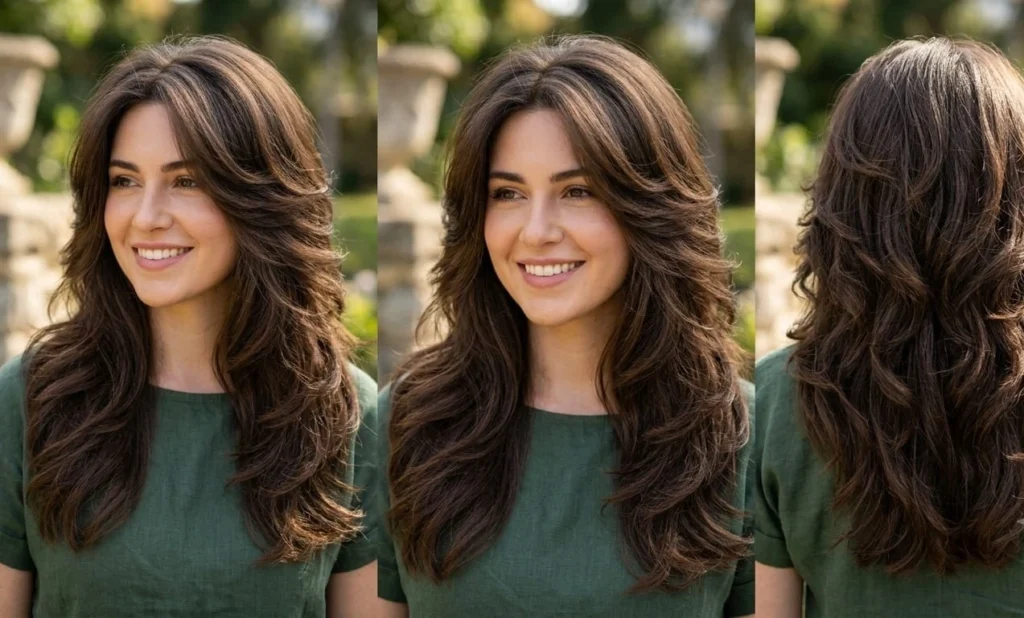
This is my most-requested cut for coarse hair, hands down. Long layers remove weight from the mid-lengths without chopping length, which keeps the hair from looking like a triangle by the time it dries.
Pros:
- Removes bulk without sacrificing length
- Grows out gracefully with no harsh line to fix
- Works equally well with waves, curls, or straight styling
Cons:
- Needs regular trims to keep layers defined
- Can look uneven if the stylist doesn’t understand coarse texture
- Full blowout styling takes 20+ minutes most mornings
Buying Guide: Don’t grab the cheapest wide-tooth comb at the drugstore — look for one with seamless edges (no mold lines), since coarse hair snags on rough plastic seams and that’s a hidden cause of breakage nobody mentions. A diffuser attachment for your dryer runs $15–$25 and is worth it if you have any wave pattern at all. For the leave-in conditioner, look for one listing glycerin or aloe near the top of the ingredient list — those actually help low-porosity coarse hair take in moisture instead of sitting on the surface.
Maintenance Guide: Book your trim every 8–10 weeks and don’t push past 12 — layers on coarse hair blend into a solid mass fast once they grow out, and you lose the whole point of the cut. Between visits, deep condition once a week and use the leave-in on damp hair every wash day before you touch a blow dryer.
| Detail | Info |
| Salon cost | $65–$120 |
| DIY cost | $0 (using tools you likely already own) |
| Maintenance level | Medium |
| Where to buy | Sally Beauty, Ulta, Amazon |
| How long it lasts | 8–10 weeks before layers need refreshing |
2. Blunt Bob
A blunt cut on coarse hair reads as polished and deliberate — the hair falls in one clean line instead of feathering out. I did this on a client transitioning back to office work after years remote, and she told me it was the first haircut in five years that didn’t need “fixing” every morning.
Pros:
- Very low daily styling effort once it’s cut right
- Reads as polished and professional instantly
- Hides slightly thinning ends better than layered cuts
Cons:
- Grows out visibly faster than a layered cut
- Can look boxy or heavy if cut too blunt for your density
- Limits versatility for updos compared to longer, layered styles
Buying Guide: A flat, boar-bristle brush ($20–$35) is worth the investment here — synthetic bristles tend to snap and drag on coarse strands, while boar bristle glides and actually distributes your scalp’s natural oil down the shaft, which coarse hair badly needs. Pick a lightweight smoothing serum with dimethicone listed low on the ingredients (too high and it’ll weigh a blunt cut down instead of smoothing it).
Maintenance Guide: Trim every 6–8 weeks without exception — a blunt line that grows out even slightly uneven is far more noticeable than it would be on a layered cut. At home, apply heat protectant before every single blow-dry, no exceptions, since a blunt cut relies entirely on smooth, undamaged ends to hold its shape.
| Detail | Info |
| Salon cost | $55–$95 |
| DIY cost | Not recommended as a DIY cut |
| Maintenance level | Low |
| Where to buy | Target, Ulta, Sephora |
| How long it lasts | 6–8 weeks |
3. Shag Haircut
If your hair has any wave or curl pattern at all, the shag is where coarse texture actually becomes an asset instead of a fight. This is a look I associate with a specific era, and honestly a lot of my clients bring in references from 70s-inspired haircuts when they’re describing what they want — heavy fringe, choppy layers, that lived-in texture.
Pros:
- Thrives on natural texture instead of fighting it
- Great at disguising bulk through heavy, choppy layering
- Very forgiving between salon visits, even a few weeks late
Cons:
- Needs confidence to style loose and slightly undone
- Can tip into looking messy (not “shaggy”) if layers aren’t blended well
- Not office-formal in every workplace culture
Buying Guide: A texturizing spray with sea salt or a light polymer hold ($12–$22) is the single product that makes or breaks this cut — it’s what gives the choppy pieces their separation. Curl cream in the $15–$28 range works well if you’re diffusing rather than air-drying. Skip anything labeled “smoothing” for this cut specifically; you want texture, not sleekness.
Maintenance Guide: Trim every 8 weeks to keep the choppy layers from softening into a shapeless mass. On non-wash days, scrunch a little texturizing spray into dry hair and diffuse for 60 seconds on low heat to revive the shape without a full restyle.
| Detail | Info |
| Salon cost | $70–$130 |
| DIY cost | Not typically DIY |
| Maintenance level | Medium |
| Where to buy | Ulta, Amazon |
| How long it lasts | 8 weeks |
4. Pixie Cut
Coarse hair pixies genuinely surprised me early in my career — I expected the texture to fight the short length, and instead it holds shape beautifully because the strand itself has natural body.
Pros:
- Easy to maintain with minimal styling after the haircut is customized.
- Keeps you noticeably cooler in hot, humid climates
- Makes thick hair feel dramatically lighter overnight
Cons:
- Requires trims every 4–6 weeks without exception
- Big commitment, especially after years of longer hair
- Not universally flattering — a real consultation matters more here than with any other cut
Buying Guide: A matte paste or clay-based pomade ($10–$20) works better on coarse pixies than gel, which tends to sit on top of the strand instead of gripping it. If you want to extend time between salon visits, a good pair of texturizing shears (around $25–$40 for a home-use pair) lets you clean up the neckline yourself between full trims — just don’t attempt the top or sides on your own.
Maintenance Guide: Book trims every 4–6 weeks on a recurring schedule, because a pixie grows out of shape faster than any other cut on this list. Between visits, a small amount of paste worked through damp fingers, then tousled by hand, is usually all the daily styling this cut needs.
| Detail | Info |
| Salon cost | $45–$85 per trim |
| DIY cost | ~$30 for clippers if maintaining the neckline yourself |
| Maintenance level | Low daily effort, high trim frequency |
| Where to buy | Amazon, drugstore |
| How long it lasts | 4–6 weeks before it grows out of shape |
5. Long Layers with Face-Framing
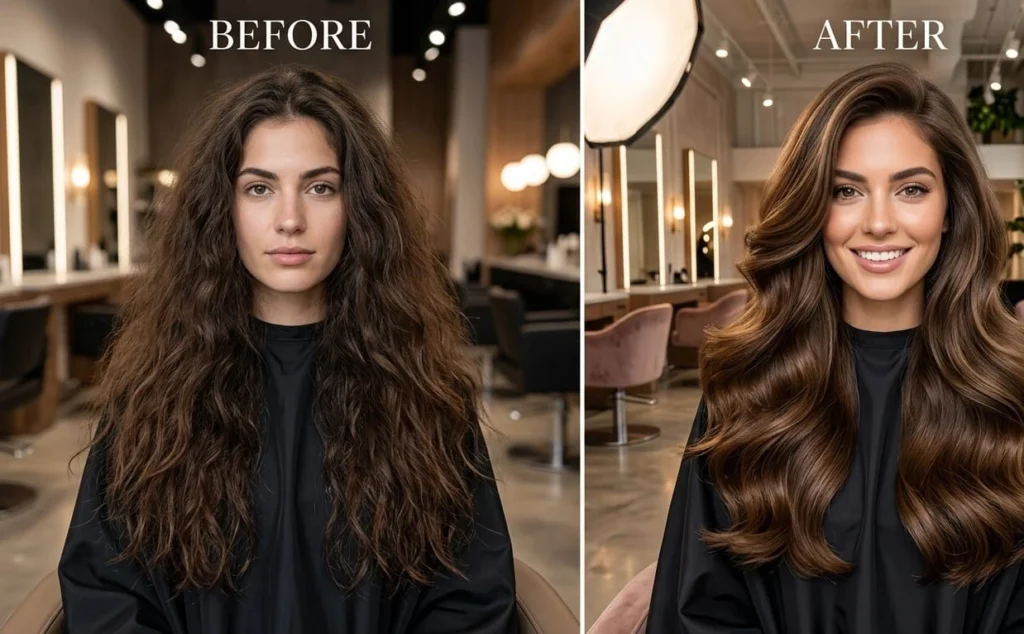
Softer than a full layered cut, this focuses the layering around the face while keeping the back heavier. Good middle ground for clients who aren’t ready to commit to shorter layers everywhere.
Pros:
- Softens angular or square face shapes noticeably
- Keeps overall length and weight for versatility
- Grows out more evenly than a fully layered cut
Cons:
- Doesn’t reduce as much overall bulk as full layering
- Still needs a diffuser or round brush for real definition
- Face-framing pieces sometimes need trims on their own schedule
Buying Guide: A medium round brush (about 2 inches in barrel size, $15–$30) is the right tool here — too large and it won’t curve the face-framing pieces properly, too small and it’ll add too much curl for a soft frame. Pair it with a light heat protectant spray, not a cream, since cream products tend to weigh down the shorter face pieces specifically.
Maintenance Guide: Trim every 8–10 weeks for the overall shape, but mention the face-framing pieces specifically to your stylist — they sometimes need a quick refresh in between if they’re growing out unevenly against your face.
| Detail | Info |
| Salon cost | $70–$110 |
| DIY cost | Not typically DIY |
| Maintenance level | Medium |
| Where to buy | Ulta, Sally Beauty |
| How long it lasts | 8–10 weeks |
6. V-Cut / U-Cut
These shape-based cuts work with coarse hair’s tendency to sit heavy at the ends. A V-cut points the shortest layer at the center back, which visually thins out that bottom-heavy look coarse hair sometimes gets.
Pros:
- Specifically designed to reduce bottom-heavy bulk
- Looks intentional and shaped even air-dried
- Flattering across most lengths past shoulder-length
Cons:
- Precision-dependent — a slightly off angle reads as a mistake
- Not reversible without cutting the length shorter
- Needs an experienced stylist, not a rushed walk-in appointment
Buying Guide: An anti-frizz serum with argan or marula oil ($18–$32) helps keep the precise point of the V or U looking clean rather than fuzzy at the edges. A wide-tooth wooden or seamless comb ($8–$15) is worth keeping in your shower specifically for detangling this cut wet, since the pointed shape shows every snag or tangle more than a blunt line would.
Maintenance Guide: Trim every 10–12 weeks — this cut holds its shape longer than most on this list, but don’t skip the appointment entirely, since the precise point is the whole feature and it blurs out first as hair grows.
| Detail | Info |
| Salon cost | $75–$125 |
| DIY cost | Not recommended |
| Maintenance level | Medium |
| Where to buy | Ulta, Amazon |
| How long it lasts | 10–12 weeks |
7. Textured Lob (Long Bob)
The lob is what I recommend most often to clients who want “shorter” without going dramatic. On coarse hair, texturizing the ends with point-cutting keeps it from reading as a solid block.
Pros:
- Versatile length that works for both updos and down styles
- Doesn’t require daily heat styling to look finished
- Flatters most face shapes without heavy customization
Cons:
- Needs regular texturizing or the ends grow heavy again
- Can look dated fast if cut too uniform without point-cutting
- Requires a proper round brush at home to reach its full potential
Buying Guide: Look for a round brush with a mixed boar-and-nylon bristle blend ($20–$35) — pure nylon can be too slippery on coarse hair, while the boar bristle adds the grip needed to shape a lob properly. A texturizing spray in the $12–$20 range finishes the look without adding stiffness.
Maintenance Guide: Trim every 8 weeks, and specifically ask for the ends to be re-texturized each visit, not just trimmed straight across — that’s the detail that keeps a lob from turning into a blunt bob by accident over a few appointments.
| Detail | Info |
| Salon cost | $60–$100 |
| DIY cost | Not typically DIY |
| Maintenance level | Medium |
| Where to buy | Sephora, Ulta |
| How long it lasts | 8 weeks |
8. Curly Shag for Coarse Curly Hair
This is a specific variation for clients whose coarse hair also has a defined curl pattern (2C–3B range typically). Layers are cut curl-by-curl, dry, so each ringlet falls where it actually wants to sit.
Pros:
- Enhances your natural curl pattern instead of fighting it
- Massively reduces frizz once it’s cut correctly, dry
- Requires almost no heat styling day to day
Cons:
- Must be cut by someone specifically trained in curly, dry cutting
- Costs more than most cuts on this list relative to length
- Curl pattern can shift with humidity, hormones, even the season
Buying Guide: Invest in a curl cream with shea butter or flaxseed extract ($16–$28) and a stronger-hold gel for the “cast” method ($14–$24) — coarse curls typically need both layered together, cream first for moisture, gel over top for hold, not one or the other alone. A microfiber towel ($10–$18) instead of a regular bath towel cuts frizz significantly just from how you dry it.
Maintenance Guide: Book curl-specific trims every 10–12 weeks with a curl specialist specifically, not a generalist stylist. Between visits, avoid touching your hair while it dries (the “hands-off” rule curly girls know well) and refresh second-day curls with a water-and-leave-in mix in a spray bottle rather than fully rewetting.
| Detail | Info |
| Salon cost | $90–$160 |
| DIY cost | Not typically DIY |
| Maintenance level | Low daily effort, curl-specific routine required |
| Where to buy | DevaCurl retailers, Ulta, Amazon |
| How long it lasts | 10–12 weeks |

9. Blowout-Friendly Layered Cut
Built specifically for clients who blow-dry daily and want that motion without spending forty-five minutes on it. The layers are cut to fall with a round brush, not against it.
Pros:
- Cuts blow-dry time down significantly compared to unlayered hair
- Looks polished and put-together for work or events
- Layers help hide split ends in between trims
Cons:
- Loses its shape if air-dried instead of blown out with a brush
- Requires a genuinely good round brush and dryer, not the cheapest option
- Frizz-prone in humid climates without the right finishing product
Buying Guide: A ceramic or ionic dryer ($40–$90) makes a measurable difference on coarse hair specifically — ionic technology breaks down water molecules faster, which means less overall heat exposure to get the same dry result. Pair it with an anti-frizz heat protectant, not just a generic one, since coarse hair needs the extra polymer coating to resist humidity after styling.
Maintenance Guide: Trim every 8–10 weeks to keep the blowout-friendly shape intact. Section your hair into four parts every time you dry it — trying to do it all at once is the single biggest reason this cut stops looking “blowout-friendly” at home.
| Detail | Info |
| Salon cost | $70–$115 |
| DIY cost | ~$60 one-time for a round brush and dryer upgrade |
| Maintenance level | Medium |
| Where to buy | Amazon, Ulta |
| How long it lasts | 8–10 weeks |
10. Wolf Cut
The wolf cut is basically a shag with more aggressive layering and a mullet-adjacent silhouette. I’ll be honest — it’s trend-driven, and it’s not for everyone, but on coarse hair with any wave, it looks incredible with almost no effort.
Pros:
- Extremely low daily maintenance styling
- Works genuinely well air-dried, not just blown out
- Disguises heavy volume as intentional texture rather than bulk
Cons:
- Very trend-specific and might feel dated in a few years
- Grows out into an awkward, hard-to-style in-between phase
- Not universally appropriate for conservative workplaces
Buying Guide: A light-hold texturizing paste or clay ($10–$18) is really the only product this cut needs — resist the urge to add multiple products, since the wolf cut’s whole appeal is that undone, unfussy texture. A wide-tooth comb for wet detangling only; skip regular brushing on dry hair entirely with this style.
Maintenance Guide: Trim every 10 weeks. This is a low-effort cut daily, but don’t let it go past the 10-week mark, since the layering that makes it work blends out fast once it grows past the intended lengths.
| Detail | Info |
| Salon cost | $75–$130 |
| DIY cost | Not typically DIY |
| Maintenance level | Low |
| Where to buy | Ulta, Amazon |
| How long it lasts | 10 weeks |
11. Wedding/Updo Style
Coarse hair actually holds updos better than fine hair because it has natural grip and texture that pins can grab onto. If you’re planning something for a wedding — yours or someone else’s — I’d point you toward messy short hairstyles for weddings for reference shots to bring to your stylist, even with longer hair, since the “undone” texture translates well to coarse strands.
Pros:
- Holds curls and pins exceptionally well through a long event
- Lasts an entire day and night without major touch-ups
- Works across both short and long lengths, unlike many updo styles
Cons:
- Needs a genuine professional for anything beyond a simple style
- Can feel tight or heavy by the end of a long night
- Trial appointments plus day-of styling add up cost-wise
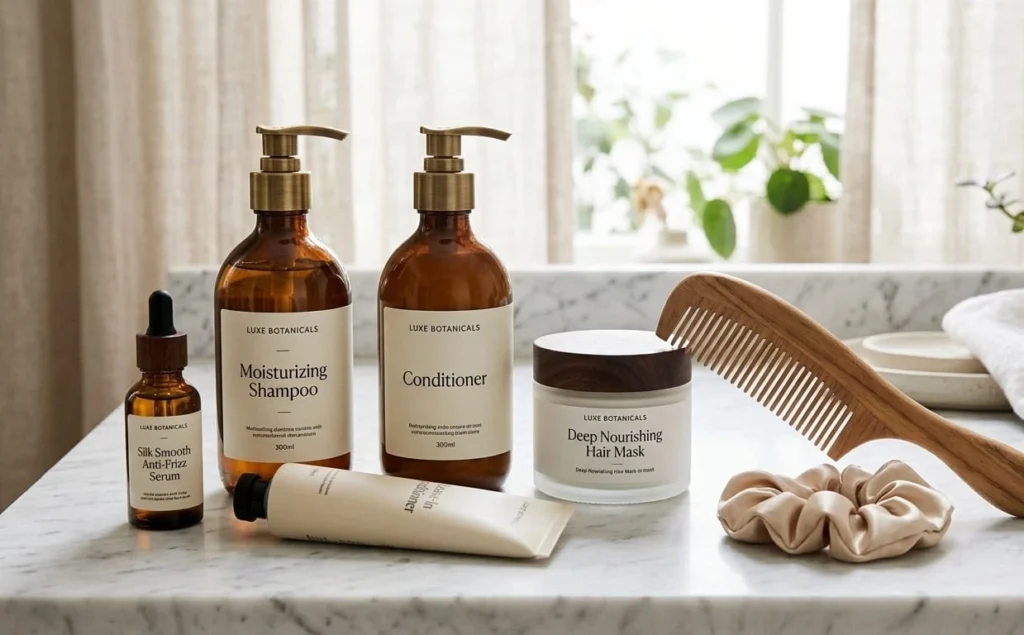
Buying Guide: Buy bobby pins that actually match your hair color rather than generic bronze ($6–$12 for a good set) — on coarse hair, mismatched pins show more since the texture doesn’t hide them the way fine, smooth hair does. A strong-hold, humidity-resistant hairspray ($15–$25) is worth the splurge for a wedding specifically, since you need it to survive hours, not just a few.
Maintenance Guide: This is event-day styling, not an ongoing routine — but if you’re the bride, book a trial appointment 4–6 weeks out so your stylist can test how your specific texture holds the chosen style before the actual day.
| Detail | Info |
| Salon cost | $85–$200 for day-of styling |
| DIY cost | $20–$40 in pins and products |
| Maintenance level | One-time event styling |
| Where to buy | Sally Beauty, Amazon |
| How long it lasts | Full event day, roughly 8–12 hours |
12. Braided Protective Style
Braids reduce daily manipulation, which matters a lot for coarse hair prone to breakage at the ends. This isn’t just an adult style either — a lot of the same principles show up in braid hairstyles designed for kids, where low-manipulation styling is the whole point, just adapted for a school-week schedule instead of an adult maintenance cycle.
Pros:
- Minimal daily styling required for weeks at a time
- Protects fragile ends from ongoing breakage
- Versatile across box braids, cornrows, and twists
Cons:
- Installation takes real time, usually 2–6 hours depending on style
- Scalp tension and discomfort if installed too tightly
- Requires a proper moisture routine underneath or the hair dries out fast
Buying Guide: Buy braiding hair in a texture that actually matches yours, not just the closest color match — synthetic braiding hair varies a lot in how it blends with coarse natural texture ($10–$25 per pack, usually need 2–3 packs). A lightweight scalp oil with tea tree or peppermint ($8–$18) helps manage itch and buildup underneath the braids, which is the number one complaint I hear from clients two weeks into a protective style.
Maintenance Guide: Keep the style in for 4–8 weeks max — leaving braids in longer than that, even if they still look fine, risks matting and tension damage at the roots. Oil your scalp every 2–3 days underneath, and wrap your hair at night to reduce friction against the pillow.
| Detail | Info |
| Salon cost | $80–$250 depending on style and length |
| DIY cost | $15–$30 in braiding hair and products |
| Maintenance level | Low daily effort, high install time |
| Where to buy | Sally Beauty, Amazon |
| How long it lasts | 4–8 weeks |
13. Low-Maintenance Bob with Bangs
Bangs on coarse hair take more product than people expect, but they’re genuinely one of the fastest ways to change your whole look without touching length.
Pros:
- Instant, dramatic style refresh without cutting length
- Great for softening a strong forehead or receding hairline
- Draws attention up toward the eyes
Cons:
- Needs trimming every 2–3 weeks to keep its shape
- Can trigger breakouts along the hairline for oilier skin types
- Frizzes faster than any other section of the cut in humidity
Buying Guide: A small round brush specifically for bangs (about 1-inch barrel, $10–$18) gives you the control a full-size brush can’t. Buy a lightweight anti-frizz cream, not a heavy serum, for the bang section specifically — too much product there looks greasy fast since it’s such a small, visible area.
Maintenance Guide: Trim your bangs yourself every 2–3 weeks between full cuts using proper shears (not kitchen scissors, which crush the strand and cause splitting). Wash the bang section slightly more often than the rest of your hair if it sits on your forehead, since it picks up oil faster.
| Detail | Info |
| Salon cost | $50–$90 for the full cut plus bang trims |
| DIY cost | ~$15 for a proper pair of cutting shears |
| Maintenance level | High, specifically for the bangs |
| Where to buy | Ulta, Amazon |
| How long it lasts | Cut lasts 8 weeks; bangs need trims every 2–3 weeks |
14. Keratin-Smoothed Long Layers
This pairs a chemical smoothing service with a long-layer cut. It’s the option I recommend when a client says “I just want it manageable,” full stop, no other conditions.
Pros:
- Dramatically cuts down frizz and daily styling time
- Makes coarse hair feel noticeably softer to the touch
- Especially useful before travel or big events
Cons:
- It’s a chemical service — not something to repeat back-to-back without a break
- Costs add up significantly across a full year
- Doesn’t work safely on hair that’s already heavily damaged
Buying Guide: Buy sulfate-free shampoo specifically formulated for keratin-treated hair ($20–$35) — regular sulfate shampoo strips the treatment early and you’ll lose weeks of the result you paid for. Avoid anything labeled “clarifying” for at least the first month post-treatment.
Maintenance Guide: Wait 3–5 months between treatments to give your hair a real break from the chemical process. In between, stick strictly to the sulfate-free routine, and avoid tight ponytails or clips near the hairline for the first 72 hours after the treatment while it fully sets.
| Detail | Info |
| Salon cost | $200–$400 for treatment plus cut |
| DIY cost | Not recommended as an at-home treatment |
| Maintenance level | Low for 3–5 months, then reapply |
| Where to buy | Salon-exclusive service; aftercare products at Ulta |
| How long it lasts | 3–5 months |
15. Natural Curly Coarse Hair Style (No-Heat)
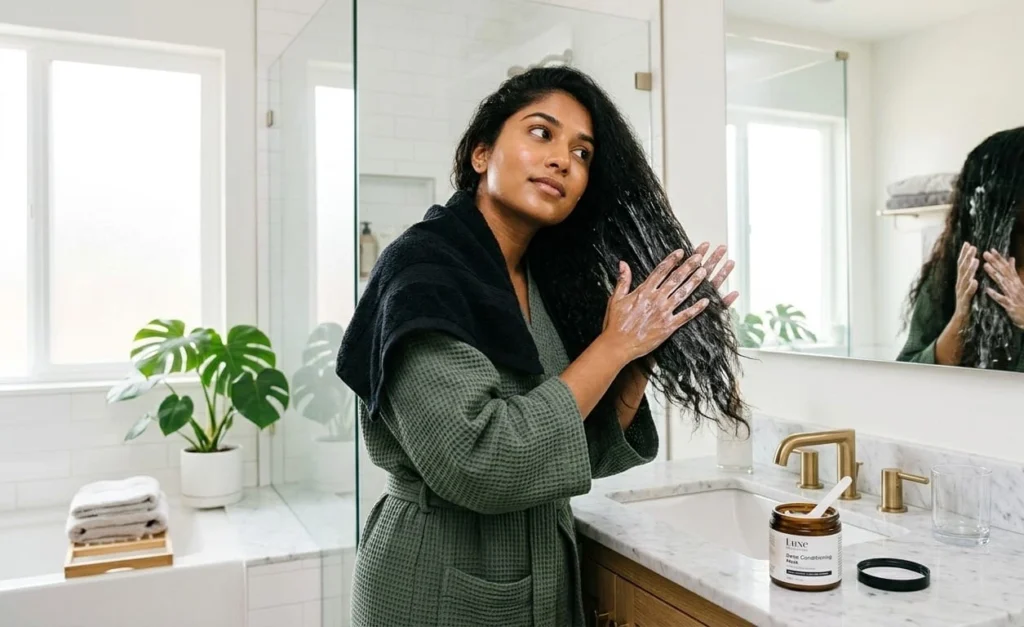
For clients who’ve decided they’re done fighting their texture. This isn’t a specific cut so much as a cutting philosophy — shaping the hair to support the curl pattern with zero reliance on heat tools.
Pros:
- Healthiest long-term option for overall hair integrity
- Saves real time once your product routine is dialed in
- Curl pattern often improves over months as old damage grows out
Cons:
- Takes real trial and error to find your specific product routine
- Results shift week to week with humidity and hormones
- Adjusting to your natural hair may take time if you’ve relied on heat styling for years.
Buying Guide: Budget for a full curl routine, not just one product: curl cream ($16–$28), a stronger gel for hold ($14–$24), and a microfiber towel or old cotton t-shirt for drying (nearly free if you already own one). Expect to try 2–3 different cream brands before finding the one that actually works with your specific curl pattern — this is normal, not a sign you’re doing it wrong.
Maintenance Guide: Get a dry, curl-specific trim every 10–12 weeks. Between cuts, avoid brushing dry curls entirely — finger-detangle in the shower with conditioner instead, which prevents the frizz that a dry brush guarantees on coarse curly hair.
| Detail | Info |
| Salon cost | $70–$140 for a curl-specific cut |
| DIY cost | $30–$60 per month for the ongoing product routine |
| Maintenance level | Low daily effort, higher product investment |
| Where to buy | Ulta, Amazon, DevaCurl |
| How long it lasts | 10–12 weeks between cuts |
16. Easy Everyday Half-Up Style (Bonus Quick Option)
Not every day calls for a full style, and coarse hair genuinely benefits from days it’s left alone. I point a lot of clients toward half-up half-down styling ideas for exactly this — it takes two minutes, keeps hair off your face, and still looks put-together for work or errands.
Pros:
- Takes under two minutes most mornings
- Works with any of the cuts covered in this guide
- Reduces daily manipulation and the breakage that comes with it
Cons:
- Not styled enough on its own for formal events
- Bulk can still show at the crown on very thick hair
- Needs a genuinely strong-hold clip or pin to survive a full day
Buying Guide: A large claw clip (4+ inches, $8–$18) holds coarse, thick hair far better than small clips or basic hair ties, which tend to snap under the weight. For a more elegant finish, add a few decorative bobby pins to elevate the style in seconds.
Maintenance Guide: There’s no real maintenance here beyond the daily two minutes — just rotate where you clip it slightly day to day to avoid creating a permanent crease or stress point in the same spot every single time.
| Detail | Info |
| Salon cost | Not applicable (at-home style) |
| DIY cost | $5–$15 for clips and pins |
| Maintenance level | Very low |
| Where to buy | Target, Amazon |
| How long it lasts | Daily style, redone each morning |
Comparison Table: Which Style Actually Fits Your Life
| Style | Salon Cost | Maintenance | Best For | Longevity |
| Layered Long Cut | $65–$120 | Medium | Everyday versatility | 8–10 wks |
| Blunt Bob | $55–$95 | Low | Professional settings | 6–8 wks |
| Shag | $70–$130 | Medium | Wavy/textured hair | 8 wks |
| Pixie Cut | $45–$85 | Low daily, frequent trims | Busy schedules, hot climates | 4–6 wks |
| Face-Framing Layers | $70–$110 | Medium | Softening angular faces | 8–10 wks |
| V-Cut/U-Cut | $75–$125 | Medium | Reducing bottom bulk | 10–12 wks |
| Textured Lob | $60–$100 | Medium | Versatile updos + down | 8 wks |
| Curly Shag | $90–$160 | Low daily | Defined curl patterns | 10–12 wks |
| Blowout-Friendly Cut | $70–$115 | Medium | Daily blow-dry routines | 8–10 wks |
| Wolf Cut | $75–$130 | Low | Trend-forward, air-dry | 10 wks |
| Wedding Updo | $85–$200 | Event-only | Special occasions | 1 day |
| Braided Style | $80–$250 | Low daily | Protective, low-manipulation | 4–8 wks |
| Bob with Bangs | $50–$90 | High (bangs specifically) | Instant refresh | 2–8 wks |
| Keratin-Smoothed Layers | $200–$400 | Low for months | Frizz-heavy hair | 3–5 mo |
| Natural Curly Cut | $70–$140 | Low daily | Heat-free lifestyles | 10–12 wks |
| Half-Up Everyday Style | $0 (at-home) | Very low | Daily quick styling | Daily |
Haircuts vs. Chemical Treatments: What’s Actually Worth the Money
I get asked constantly whether it’s better to just cut the hair or invest in a smoothing treatment. Honest answer — it depends on how much time you actually have in your morning routine, and how much damage your hair’s already carrying.
| Option | Cost | Damage Risk | Result Lasts |
| Layered haircut alone | $55–$130 | None | Ongoing, grows with you |
| Keratin treatment | $200–$400 | Medium | 3–5 months |
| Brazilian blowout | $180–$350 | Medium | 3–4 months |
| Relaxer/chemical straightening | $80–$180 | High | 2–3 months, with regrowth upkeep |
A haircut costs less over a full year and carries zero chemical risk, but it won’t cut your styling time the way a smoothing treatment will. If your main complaint is frizz and styling time specifically, a treatment earns its cost. If your complaint is bulk and shape, a cut solves it and a treatment won’t touch that problem at all.
Budget Tiers: What You Actually Get at Each Price Point
| Tier | Price Range | What’s Included |
| Budget | $45–$85 | Basic cut, no extras, chain salon or newer stylist |
| Mid-range | $85–$150 | Experienced stylist, real consultation, blowout included |
| Premium | $150–$400+ | Master stylist or curl specialist, chemical treatments, extended consultation |
How to Actually Style Coarse Hair at Home
Blow-drying coarse hair the wrong way is where most of the frustration starts. Section the hair into four parts before you even turn the dryer on — trying to dry it all at once just pushes hot air over already-dry sections while the roots stay damp. Use a round brush with tension, pulling down and slightly back as you dry each section, and finish with the cool shot button to seal the cuticle flat.
Straightening coarse hair safely means turning the temperature down, not up. A lot of clients assume coarse hair needs the highest heat setting because it “won’t budge” otherwise — actually the opposite is true. Coarse hair retains heat well, so using a lower heat setting with slow, steady passes is gentler than one high-heat pass.
Product order matters more than most people realize: leave-in conditioner first (while hair’s still damp), then a heat protectant, then whatever styling product you’re using — cream, gel, or serum — applied section by section, not dumped on top after the hair’s already dry.
Washing Guide: How Often Is Actually Right for Coarse Hair
Coarse, thick hair generally does better washed every 2–3 days rather than daily. Daily washing strips the limited natural oils this hair type already struggles to distribute down the shaft (remember, low porosity means moisture doesn’t move through easily in either direction). If you’re not sure how this fits into your overall trim schedule, I’ve written more on how often women should actually get a haircut — washing frequency and cut frequency are two separate questions people often mix up.
Sulfate-free shampoo matters here specifically because sulfates strip the cuticle further, which coarse hair can’t afford given it’s already resistant to moisture retention. Follow with a rich, moisturizing conditioner — and don’t skip a weekly deep conditioning treatment. For hair on the drier end, an overnight treatment once a week does more than a quick five-minute conditioner ever will, since it gives the product actual time to work through that tight, low-porosity cuticle layer.
Seasonal Styling Advice
Summer is a frizz battle. Humidity swells the cuticle open, and coarse hair reacts fast. Anti-humidity serums with a light hold work better than heavy oils, which can actually weigh hair down without controlling frizz at all.
Winter flips the problem — indoor heating strips moisture, and coarse hair that’s already prone to dryness gets worse fast. This is when oil treatments earn their keep, applied to mid-lengths and ends (never the roots, unless you want an oily scalp by day two).
Humid or rainy climates call for protective styles more than any fighting-against-nature routine. Braids, buns, and updos hold up when loose styles just won’t.
Safety Section: Mistakes That Actually Damage Coarse Hair
This part matters more than people expect, and it’s the section I wish more clients read before their appointment, not after a bad cut.
- Over-thinning with thinning shears. This is the single most common mistake I see walking in from other salons. A stylist who doesn’t understand coarse texture over-thins to “reduce bulk,” and it creates frizzy, flyaway pieces that stick straight out instead of lying flat.
- Heat without protectant, every single time. Coarse hair holds heat longer than fine hair, which means unprotected heat styling does more cumulative damage than people realize until they notice breakage months later.
- Skipping deep conditioning because “my hair already feels heavy.” Feeling weighed down and being properly moisturized are two different things. Coarse hair can feel heavy and still be dehydrated underneath.
- The wrong cut for your face shape, chosen off a photo without an actual consultation — this is avoidable with five extra minutes of conversation before the scissors come out.
- Brushing dry hair aggressively. Wet or damp brushing with a wide-tooth comb is safer for coarse hair than dry brushing, which causes far more breakage than most people assume.
Which Hairstyle Should YOU Actually Choose?
If you’re busy and don’t have time most mornings — the blunt bob or textured lob wins. If you’re older and want lower daily effort with softness around the face — face-framing layers or a pixie. If your hair is naturally curly and you’re tired of fighting it — the curly shag or natural curly cut. If you’ve got an event coming up — the wedding updo, styled by a professional who’s worked with coarse hair before. If frizz is your single biggest complaint and you have the budget for it — keratin-smoothed layers. If you want the lowest possible long-term cost and zero chemical risk — the layered long cut, full stop.
My Personal Favorite (And the Client Who Changed My Mind)
If you asked me years ago, I’d have said the blunt bob, because it’s foolproof and it photographs well. Now, honestly, it’s the long layered cut with face-framing pieces. I had a client — I’ll call her Maria, she comes in every two months — who’d spent years getting her coarse hair thinned out aggressively because that’s what she’d always been told to do. We tried the opposite approach: long layers, no thinning shears at all, just proper layering to remove weight the right way. She texted me a week later saying it was the first time in her adult life someone had cut her hair “like it was supposed to be there.” That’s stuck with me more than any technical result could.
Expert Tips Recap
- Never let anyone use thinning shears on the ends without discussing it first — it’s the fastest way to create frizz you didn’t have before.
- Dry your hair in sections, always, even if it adds five minutes.
- Deep condition weekly, not “when it feels dry” — coarse hair needs it before it starts showing.
- Lower heat, more passes beats high heat, fewer passes every time.
- Trust a consultation over a Pinterest photo — texture changes everything about how a cut will actually sit.
- If your stylist doesn’t ask about your porosity or texture before cutting, that’s worth noting for next time.
Frequently Asked Questions
What is the best haircut for thick coarse hair? Layered cuts generally work best because they remove weight without sacrificing length, though the “best” one depends heavily on your face shape and how much daily styling time you actually have.
What haircuts make thick hair look thinner? Long layers, V-cuts, and textured lobs all reduce visual bulk by removing weight strategically rather than cutting straight across.
Should I get layers if I have thick coarse hair? In most cases, yes — layering is one of the few techniques that actually reduces bulk without requiring thinning shears, which tend to cause frizz on coarse texture.
Are bangs good for thick coarse hair? They can be, but expect higher maintenance — bangs on coarse hair need trims every 2–3 weeks and more daily product than the rest of the cut.
Can I get a pixie cut with thick coarse hair? Yes, and it often holds shape better than people expect because coarse strands have natural body, though it requires frequent trims to stay sharp.
What’s a low-maintenance hairstyle for thick coarse hair? The blunt bob and the wolf cut both require minimal daily styling effort, especially if you’re comfortable air-drying.
How often should I trim thick coarse hair? Every 8–10 weeks for most layered cuts, though bangs and pixies need trims closer to every 4–6 weeks.
Final Thoughts
If you only take one thing from this whole guide: the “problem” was never that your hair is too thick or too coarse. It’s that most cuts aren’t designed with your texture in mind. Bring a real consultation into the conversation, not just a saved photo, and you’ll walk out with something that actually works for how your hair grows and how you actually live day to day.