Split ends are one of the most common hair concerns for women. Whether you have long, short, straight, curly, or color-treated hair, damaged ends can make your hair look dry, frizzy, and unhealthy. Frequent heat styling, chemical treatments, sun exposure, and even rough brushing can weaken the hair shaft over time, causing the ends to split.
While many products claim to “repair” split ends, it’s important to understand that once a hair strand splits, it cannot be permanently fused back together. However, the good news is that the appearance of split ends can be improved, further damage can be reduced, and healthy new hair growth can be protected with the right home care routine.
In this guide, you’ll learn what causes split ends, how to identify them, and the best home remedies to nourish your hair naturally. You’ll also discover simple daily habits that help prevent split ends from coming back.
What Are Split Ends?
Split ends, also called trichoptilosis, occur when the protective outer layer of the hair becomes damaged and the end of the hair shaft separates into two or more strands. As the damage spreads upward, hair becomes rougher, weaker, and more likely to break.
Although split ends are most noticeable on long hair, they can affect any hair length or texture.
Who Is Most Likely to Get Split Ends?
Split ends are more common if you:
- Frequently use flat irons, curling irons, or blow dryers.
- Color or bleach your hair regularly.
- Wash your hair too often.
- Brush your hair aggressively.
- Spend a lot of time in the sun without protecting your hair.
- Have naturally dry or curly hair.
Common Signs of Split Ends
Look for these signs:
- Hair ends splitting into two or more sections.
- Dry, rough ends.
- Frizzy hair that won’t stay smooth.
- Hair that tangles easily.
- Increased breakage.
- Dull appearance.
- Hair that feels brittle.
- Uneven ends.
Can Split Ends Be Repaired?
No home remedy can permanently seal a split hair strand. Products such as oils, serums, and conditioners can temporarily smooth the hair cuticle, reduce frizz, and make split ends less noticeable. Regular trims remain the most effective way to remove split ends and prevent them from traveling farther up the hair shaft.
How to Know If You Have Split Ends
Not every damaged strand is a split end. Understanding the condition of your hair helps you choose the right care routine.
Mild Split Ends
- Slight dryness
- A few visible split ends
- Minimal frizz
- Hair remains soft overall
Recommended care: Deep conditioning, lightweight oils, and reducing heat styling.
Moderate Split Ends
- Multiple split ends
- Tangled hair
- Rough texture
- Noticeable frizz
- Some breakage
Recommended care: Weekly hair masks, regular trims, leave-in conditioner, and heat protection.
Severe Split Ends
- Split ends throughout the hair
- Hair snapping easily
- Very dry ends
- Thin, uneven hair
- Frequent breakage
Recommended care: Trim damaged ends, reduce heat styling, and follow a consistent moisturizing routine. If damage is extensive, consult a licensed hairstylist.
What Causes Split Ends?
Split ends usually develop over time due to repeated stress on the hair.
Common causes include:
- Frequent heat styling
- Hair coloring and bleaching
- Chemical treatments
- Excessive sun exposure
- Overwashing
- Rough towel drying
- Tight hairstyles
- Brushing wet hair roughly
- Poor nutrition
- Skipping regular hair trims
Knowing the cause helps you prevent future damage while improving the appearance of existing split ends.
Things to Consider Before Trying Home Remedies
Before starting any treatment, think about these important factors.
Hair Type
Fine hair benefits from lightweight oils and conditioners, while thick or curly hair often needs richer moisturizing treatments.
Hair Porosity
High-porosity hair loses moisture quickly and usually requires more frequent conditioning.
Damage Severity
A few split ends can often be managed with regular trims and conditioning, while severe damage may require professional advice.
Lifestyle
If you use hot tools every day, reducing heat styling will likely have a greater impact than adding more products.
Budget
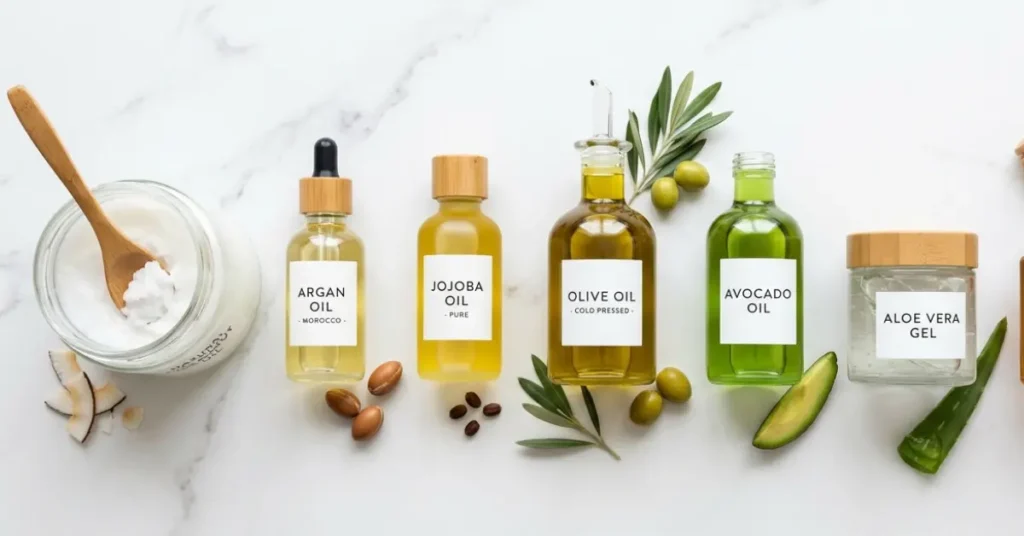
Many effective home remedies use affordable ingredients such as coconut oil, honey, aloe vera, or olive oil.
1. Coconut Oil Treatment
Coconut oil is one of the most popular home remedies for dry, damaged hair. It helps reduce moisture loss and leaves hair feeling softer and smoother.
Best For
- Dry hair
- Thick hair
- Curly hair
Benefits
- Adds moisture
- Reduces frizz
- Improves softness
- Helps protect against dryness
Drawbacks
- May feel heavy on fine hair.
How to Use
Warm a small amount of coconut oil in your hands and apply it to the mid-lengths and ends. Leave it on for at least 30 minutes before washing, or use a small amount on dry ends if it suits your hair type.
Frequency
Once or twice each week.
Expected Results
Softer, shinier hair with smoother-looking ends after several weeks of consistent use.
2. Argan Oil
Often called “liquid gold,” argan oil helps smooth rough hair, reduce frizz, and add shine without feeling overly heavy.
Best For
- Fine hair
- Color-treated hair
- Frizzy hair
Benefits
- Lightweight hydration
- Improves shine
- Softens hair
- Helps control flyaways
Drawbacks
- Using too much can leave hair looking greasy.
How to Use
Rub 1–3 drops between your palms and apply lightly to the ends of dry or damp hair.
Frequency
Daily or as needed.
Expected Results
Smoother, shinier ends and reduced frizz with regular use.
3. Aloe Vera Hair Mask
Aloe vera is known for its moisturizing properties and can help improve the feel of dry, damaged hair.
Best For
- Dry hair
- Sensitive scalp
- Curly hair
Benefits
- Adds hydration
- Softens hair
- Helps reduce dryness
- Easy to use at home
Drawbacks
- Results vary depending on hair condition.
How to Use
Apply fresh aloe vera gel or a ready-made aloe vera hair mask to damp hair, focusing on the ends.
Frequency
Once a week.
Expected Results
Hair that feels softer, smoother, and easier to manage over time.
4. Honey and Olive Oil Mask
Honey attracts moisture, while olive oil helps coat and soften the hair shaft, making this a popular DIY treatment for dry ends.
Best For
- Very dry hair
- Thick hair
- Coarse hair
Benefits
- Deep hydration
- Improved softness
- Reduced roughness
- Better shine
Drawbacks
- Can be messy to apply and rinse.
How to Use
Mix equal parts honey and olive oil, apply to the mid-lengths and ends, leave on for 20–30 minutes, then rinse thoroughly.
Frequency
Once a week.
Expected Results
Hair feels more hydrated and looks smoother with regular use.
5. Avocado Hair Mask
Avocado is rich in healthy fats and nutrients that help nourish dry hair and improve softness.
Best For
- Thick hair
- Curly hair
- Damaged hair
Benefits
- Moisturizes hair
- Improves softness
- Helps reduce frizz
- Adds natural shine
Drawbacks
- Requires blending well to avoid leaving small pieces in the hair.
How to Use
Mash a ripe avocado until smooth, apply it to damp hair, leave it on for about 30 minutes, then rinse and shampoo.
Frequency
Once every 1–2 weeks.
Expected Results
Hair feels softer, smoother, and more manageable after consistent treatments.
6. Egg Protein Hair Mask
Eggs are rich in protein and healthy fats that can temporarily strengthen weak hair and leave it feeling softer. This DIY treatment works best when your hair feels fragile from styling damage.
Best For
- Weak hair
- Fine hair
- Heat-damaged hair
Benefits
- Helps strengthen the hair shaft
- Adds softness
- Improves shine
- Reduces the appearance of dryness
Drawbacks
- Strong odor
- Can be difficult to rinse with hot water
How to Use
Whisk one egg with one tablespoon of olive oil. Apply the mixture to damp hair, focusing on the mid-lengths and ends. Leave it on for 20 minutes, then rinse thoroughly with cool or lukewarm water before shampooing.
Frequency
Every 2 weeks.
Expected Results
Hair may feel smoother, stronger, and more manageable after consistent use.
7. Yogurt Hair Treatment
Plain yogurt contains proteins and fats that help condition dry hair while improving softness and manageability.
Best For
- Dry hair
- Frizzy hair
- Curly hair
Benefits
- Deep hydration
- Softens rough ends
- Adds shine
- Helps reduce frizz
Drawbacks
- Results are temporary and require regular use.
How to Use
Apply plain yogurt evenly through damp hair. Leave it on for 20–30 minutes before rinsing and shampooing.
Frequency
Once a week.
Expected Results
Hair feels softer and looks healthier after several treatments.
8. Shea Butter Treatment
Shea butter helps coat the hair shaft, reducing dryness and improving softness.
Best For
- Thick hair
- Coily hair
- Extremely dry hair
Benefits
- Locks in moisture
- Smooths rough ends
- Reduces frizz
- Adds softness
Drawbacks
- May be too heavy for fine hair.
How to Use
Rub a small amount between your palms and apply only to the ends of dry or damp hair.
Frequency
2–3 times per week.
Expected Results
Softer, smoother-looking ends with less visible frizz.
9. Deep Conditioning Treatment
Deep conditioners deliver concentrated moisture to dry, damaged hair and can improve its overall appearance.
Best For
- All hair types
- Color-treated hair
- Heat-damaged hair
Benefits
- Restores moisture
- Improves elasticity
- Makes hair easier to detangle
- Reduces roughness
Drawbacks
- Requires consistent use for lasting improvement.
How to Use
After shampooing, apply a deep conditioner from the mid-lengths to the ends. Leave it on according to the product directions before rinsing.
Frequency
Once or twice each week.
Expected Results
Noticeably softer, shinier hair after a few weeks.
10. Leave-In Conditioner
Leave-in conditioners provide lightweight hydration throughout the day and help protect the hair from friction and dryness.
Best For
- Dry hair
- Fine hair
- Frizzy hair
Benefits
- Adds moisture
- Improves detangling
- Controls frizz
- Reduces breakage
Drawbacks
- Too much product may weigh down fine hair.
How to Use
Apply to damp hair after washing, concentrating on the ends.
Frequency
After every wash.
Expected Results
Hair remains softer and easier to style.
11. Hair Serum for Split Ends
Hair serums coat damaged ends, creating a smoother appearance and adding shine.
Best For
- Frizzy hair
- Dry ends
- Heat-styled hair
Benefits
- Smooths flyaways
- Adds shine
- Helps reduce tangles
- Makes split ends less noticeable
Drawbacks
- Cosmetic improvement only; it does not permanently repair split ends.
How to Use
Apply 1–2 pumps to dry or damp ends after styling.
Frequency
As needed.
Expected Results
Instantly smoother-looking ends and reduced frizz.
12. Sleep on a Satin Pillowcase
Changing your pillowcase is a simple way to reduce friction while you sleep.
Best For
- All hair types
Benefits
- Reduces breakage
- Helps prevent tangles
- Minimizes frizz
- Protects hairstyles overnight
Drawbacks
- Slightly higher cost than cotton pillowcases.
How to Use
Replace your cotton pillowcase with a satin or silk one and use it every night.
Frequency
Daily.
Expected Results
Less morning frizz and fewer tangled ends.
13. Trim Split Ends Regularly
Although trimming isn’t a home remedy, it remains the most effective way to remove split ends and stop them from worsening.
Best For
- Moderate to severe split ends
Benefits
- Removes damaged ends
- Prevents further splitting
- Improves hair appearance
Drawbacks
- Reduces hair length slightly.
How to Use
Schedule a trim every 8–12 weeks or sooner if your ends are severely damaged.
Expected Results
Healthier-looking hair immediately after trimming.
14. Reduce Heat Styling
Limiting heat styling gives your hair time to recover and helps prevent new split ends.
Best For
- Frequent heat tool users
Benefits
- Prevents further damage
- Reduces breakage
- Supports healthier hair
Drawbacks
- May require learning heatless styling techniques.
How to Use
Choose air drying, braids, buns, or heatless curl methods several days each week.
Frequency
As often as possible.
Expected Results
Reduced breakage and healthier-looking ends over time.
15. Eat a Hair-Healthy Diet
Healthy hair growth depends on good nutrition. While diet won’t repair existing split ends, it supports stronger new hair as it grows.
Include Foods Rich In
- Protein
- Iron
- Zinc
- Omega-3 fatty acids
- Vitamins A, C, D, and E
Benefits
- Supports healthy hair growth
- Helps maintain stronger strands
- Improves overall hair health
Drawbacks
- Results take time and depend on overall nutrition.
Home Remedy Routine by Hair Type
| Hair Type | Best Home Remedies |
|---|---|
| Fine Hair | Argan oil, leave-in conditioner, yogurt mask |
| Thick Hair | Coconut oil, avocado mask, shea butter |
| Straight Hair | Aloe vera, lightweight serum, deep conditioner |
| Wavy Hair | Honey & olive oil mask, leave-in conditioner |
| Curly Hair | Coconut oil, shea butter, deep conditioner |
| Coily Hair | Shea butter, avocado mask, protective hairstyles |
| Color-Treated Hair | Sulfate-free products, deep conditioner, heat protectant |
| Bleached Hair | Bond-building treatments, moisturizing masks, regular trims |
30-Day Split End Care Plan
| Week | Focus | Goal |
|---|---|---|
| Week 1 | Deep conditioning, reduce heat styling | Restore moisture |
| Week 2 | Hair masks and nourishing oils | Improve softness |
| Week 3 | Trim split ends and use leave-in conditioner | Reduce breakage |
| Week 4 | Maintain healthy routine and evaluate progress | Prevent future damage |
Product Buying Guide
Choosing the right products can make split ends look smoother, reduce breakage, and help prevent future damage. Focus on moisturizing, strengthening, and protecting your hair rather than products that claim to permanently repair split ends.
Budget-Friendly Essentials
- Sulfate-free shampoo
- Moisturizing conditioner
- Coconut oil
- Aloe vera gel
- Leave-in conditioner
- Wide-tooth comb
Best For
- Beginners
- Affordable hair care routines
- Mild split ends
Mid-Range Hair Care
- Deep-conditioning mask
- Argan oil
- Hair serum
- Heat protectant spray
- Satin pillowcase
Best For
- Dry hair
- Frizzy hair
- Heat-damaged hair
Premium Hair Care
- Bond-building treatment
- Professional deep conditioner
- Luxury hair oil
- Ceramic hair dryer with adjustable heat settings
- Professional styling tools with temperature control
Best For
- Bleached hair
- Color-treated hair
- Severe hair damage
Ingredients to Look For
- Argan oil
- Coconut oil
- Shea butter
- Aloe vera
- Glycerin
- Ceramides
- Hydrolyzed proteins
- Panthenol
- Jojoba oil
Ingredients to Avoid
- Harsh sulfates (if your hair is dry or color-treated)
- High amounts of drying alcohols in leave-in products
- Products with excessive fragrance if you have a sensitive scalp
DIY vs Store-Bought Treatments
| DIY Remedies | Store-Bought Products |
|---|---|
| Affordable | More convenient |
| Natural ingredients | Targeted formulations |
| Easy to prepare | Consistent application |
| Require preparation | Ready to use |
| Great for hydration | Often include strengthening ingredients |
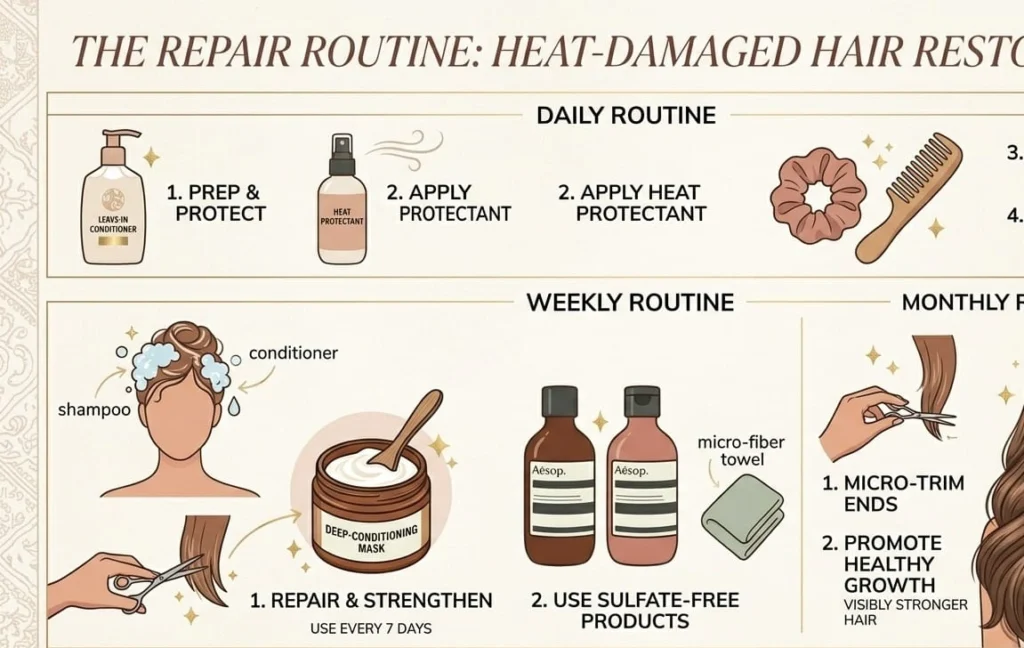
Daily, Weekly & Monthly Hair Care Routine
Daily Routine
- Apply a leave-in conditioner after washing.
- Use a heat protectant before styling.
- Avoid excessive brushing.
- Use a wide-tooth comb on damp hair.
- Apply a small amount of hair oil to dry ends if needed.
Weekly Routine
- Wash with a sulfate-free shampoo.
- Deep condition once or twice a week.
- Apply a nourishing hair mask.
- Massage your scalp for a few minutes to support a healthy scalp.
Monthly Routine
- Trim split ends every 8–12 weeks.
- Replace damaged hair ties and worn brushes.
- Review your routine and adjust products if your hair’s needs change.
Professional Hair Care
Consider visiting a hairstylist if you notice:
- Severe split ends
- Excessive breakage
- Hair that feels weak after bleaching
- Persistent dryness despite consistent care
Common Mistakes That Make Split Ends Worse
- Skipping regular trims.
- Using heat styling tools every day.
- Forgetting heat protectant.
- Washing hair too often.
- Using very hot water.
- Brushing wet hair roughly.
- Tight ponytails every day.
- Using harsh shampoos.
- Sleeping on rough cotton pillowcases.
- Picking at split ends with your fingers.
Seasonal Hair Care Tips
Summer
- Protect hair from UV exposure.
- Wear a hat during prolonged sun exposure.
- Rinse hair after swimming.
Winter
- Deep condition weekly.
- Reduce heat styling.
- Add lightweight hair oil to the ends.
Humid Weather
- Use anti-frizz products.
- Avoid heavy creams if they weigh your hair down.
Dry Climates
- Increase moisture with leave-in conditioners.
- Deep condition regularly.
Travel Tips
- Pack travel-size hair care products.
- Carry a satin scrunchie.
- Minimize heat styling during trips.
Expert Recommendations
Best Home Remedy Overall
Coconut oil combined with weekly deep conditioning for improving softness and reducing dryness.
Best for Fine Hair
- Argan oil
- Leave-in conditioner
- Lightweight serum
Best for Thick Hair
- Coconut oil
- Shea butter
- Avocado hair mask
Best for Curly Hair
- Deep conditioner
- Coconut oil
- Satin pillowcase
Best Budget Routine
- Sulfate-free shampoo
- Coconut oil
- Weekly DIY hair mask
- Regular trims
When to Visit a Hairstylist
Seek professional advice if:
- Split ends extend far up the hair shaft.
- Hair breaks easily despite home care.
- Damage follows bleaching or chemical treatments.
Frequently Asked Questions
Can split ends be repaired naturally?
No. Home remedies can improve the appearance of split ends and reduce further damage, but they cannot permanently rejoin split hair strands.
Does coconut oil fix split ends?
It helps reduce dryness and improve softness but does not permanently repair split ends.
How often should I trim split ends?
Most people benefit from trimming every 8–12 weeks, depending on hair type and the level of damage.
Which oil is best for split ends?
Argan oil is lightweight and adds shine, while coconut oil is a good option for reducing moisture loss.
Are DIY hair masks effective?
They can improve softness and hydration, especially when used consistently as part of a regular hair care routine.
How long does it take to see improvement?
Many people notice smoother, softer hair within a few weeks of consistent care, though existing split ends won’t be permanently repaired.
Does deep conditioning help?
Yes. Deep conditioning improves moisture, softness, and manageability, making damaged ends look healthier.
How can I stop split ends from coming back?
Limit heat styling, use a heat protectant, deep condition regularly, avoid rough brushing, and trim your hair consistently.
Final Verdict
Learning how to treat split ends at home for women is about building healthy habits rather than searching for a permanent fix. Although split ends cannot be permanently repaired, you can significantly improve your hair’s appearance with regular deep conditioning, nourishing oils, leave-in conditioners, and protective styling.
The most effective long-term strategy combines regular trims, reduced heat styling, consistent moisture, and gentle hair care practices. By following a simple routine and choosing products that suit your hair type, you can reduce breakage, keep your ends looking smoother, and support healthier hair growth over time.